A Somatic Photographic Encounter (A Body in Front of the Camera)
INTRO
In many situations of my life, I am the one who is holding a camera and deciding in which situation to seize the moment. However, some time ago I found myself on the other side of the camera. Before the camera was brought into the conversation, the atmosphere was cozy and chilled. But the moment I heard, “Let me take your picture,” something shifted. My body, from the embedded in itself suddenly felt fragile, as if it began to shrink inward. I felt that I wanted to find shelter between my shoulders like I do during long walks in winter when the cold bites too deep. And then I wondered – how do the people I photograph feel in those moments? What is happening in their bodies when the camera is raised? Is there a quiet gentleness in them, or something tense? Do they register the moment at all, or does the whole process seem to be indifferent to them? And if something is shifting what is actually the reason for this? In this text, I focus on the encounter of the photographer and the photographed person, their possible connection or the lack of it, and the experience of their internal bodies.
SOMA
The body has always been very fascinating for me, especially in the context of anatomy, interaction between their parts, as well as the way how the energy flows through our bodies. It is compelling when I sense tightness in one muscle in the lower part of the body, pain sometimes arises in a completely different organ. This is in a way my reminder of how important it is to understand and listen to my own body. That’s why I often catch myself asking questions: when I feel stressed, which organ reacts first? Where is the source of all the feelings I experience? And in the context of photography, what sensations move through me when I’m the one being photographed? And why do I usually struggle with my jaw? Yes, the jaw. I remember in the classes the Body-Mind Centering (BMC method, which explores how the mind is expressed through the body)1 I have always heard that the jaw contains many muscles and often holds tension, especially during moments of stress or control. When we are nervous or uncomfortable, the jaw tightens almost without us noticing. That’s why I associate this with the moment of being photographed. I always want to cover my jaw. My own experience leads me to the question, what exactly happens when the camera appears?
I am aware that this experience is deeply personal. Each of us lives in a distinct body and carries a unique relationship with it. Our bodies react in their own ways, they are shaped by memory, emotion, past experiences, and our individual tolerance to stress or pressure. Because of this, the act of being photographed can never be a universal experience. It is always filtered through the body and history of the person standing in front of the camera.
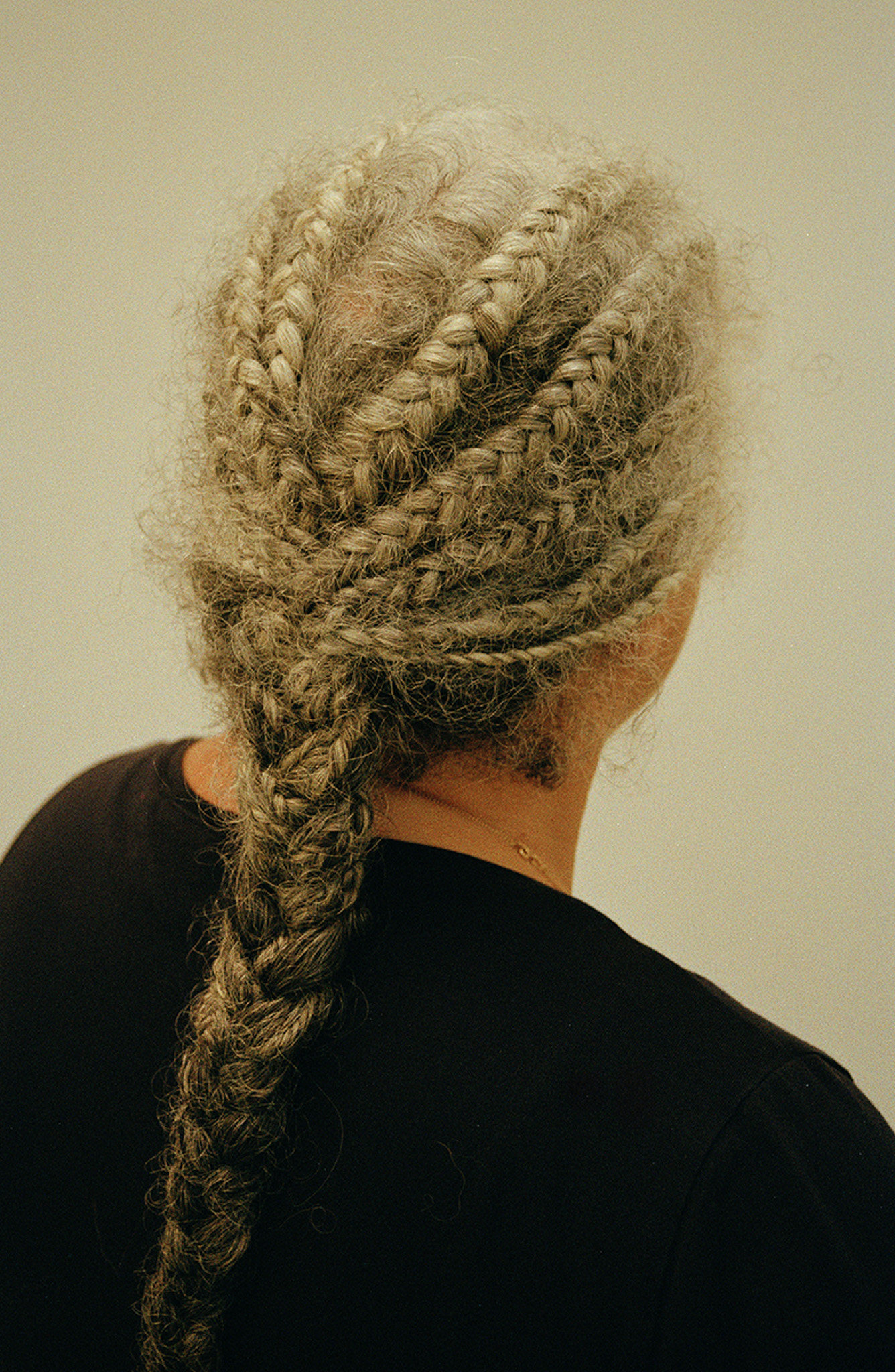
Figure 1. Sokołowska Katarzyna, Untitled
PHOTOGRAPHIC EXPERIENCE
Roland Barthes, the French literature theorist, as an active observer of the process of photography, is noticing that the act of being photographed is not passive, on the contrary, it affects the self-construction and builds bodily-unease. In his book, Camera Lucida, he has shared with us his experience as a photographed person. In the moment of being observed through the camera lens, something within him shifts, he suddenly feels the need of adjusting, posing, becoming someone else. He starts to feel compelled and be into recreating himself anew. In the act of self – construction, he constructs not his true self, but a projection, an attempt to pre-empt the gaze of the Other. This is where the process becomes unsettling. Barthes describes this sensation as “mortifying”. The photograph seems to freeze a fragment of the self, fixing it in time and stripping it of movement and change. “In trying to present ourselves in a certain way, we risk ending up feeling disconnected from who we are”.2
PSYCHOLOGICAL PERSPECTIVE
From a psychological point of view, a point presented by Carl Rogers, an American psychologist, we talk about the internal struggle between the self-image – how we see ourselves in the present, and the ideal self – the version of ourselves we aspire to be.3 When our self-image and ideal self are close, we experience congruence and a sense of harmony. As the photographed person, I try to present myself in front of the camera as I wish to be seen. However, I’m also aware, deep down, that this version isn’t fully real. It’s a constructed image created in my mind, based on ideals that are often impossible to reach. That’s why the process of being photographed creates a lot of frustration and takes comfort away. Because the poses I choose feel no longer natural, I become occupied with thoughts, attempting to mentally project the version of “me” that I believe looks best. My body tenses and my presence becomes fragile. This tension is captured by the camera: a forced smile, a distant gaze, a stiff jaw (again). Seen this way, the photograph records not only appearance, but the tension between self-image and ideal self. In this moment, I begin to question: Can my best version of me ever really align with who I am right now?
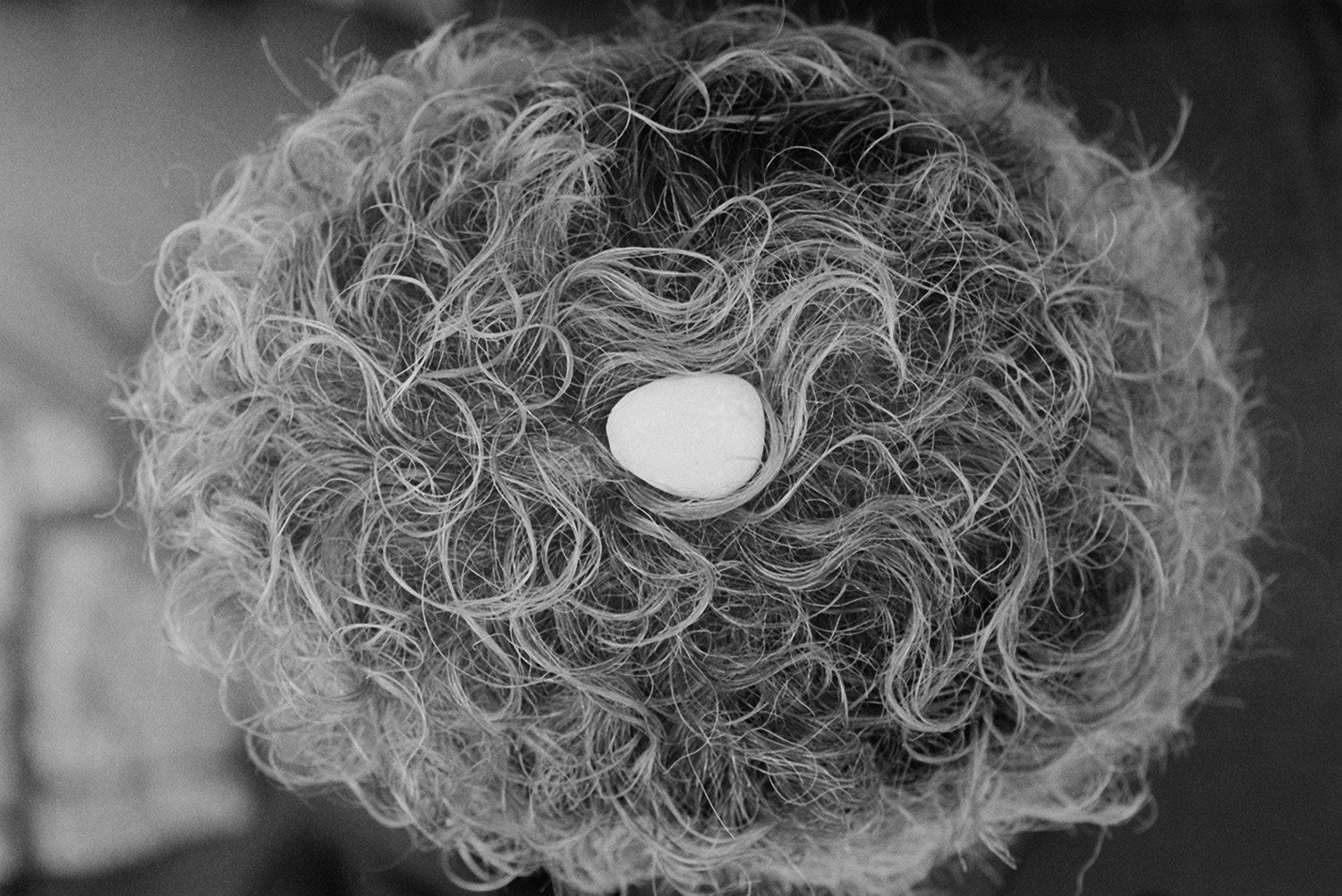
Figure 2. Sokołowska Katarzyna, Untitled from the series Roll me, don’t curse me
PRACTICAL APPROACH
Time for an encounter between a photographer and a photographed person.
There are a dozen possible scenarios. Here, I would like to present two of them which confirm that the photographic encounter is shaped not only by the subject, but by the relation between photographer and photographed person. First of them will be the approach of Rineke Dijkstra, a Dutch photographer known for portraits marked by tension and vulnerability. She was mostly photographing people with whom she wasn’t familiar, people that she just approached on a street, beach etc, due to her curiosity about their vulnerability. The effect of their collaboration gives the impression of tension. The reason is the way of direct staring the photographed at the photographer. However, for me, as a viewer, I have the feeling that this person is staring at me. This intense way of staring may come from the way Dijkstra looks at her subjects, maybe from the intention to get to know them, to understand, since they have just met. Maybe the fact that in the picture is only a person, and a plain background encourages them to focus only on the discomfort of the person and stiffness of the body. This stiffness seems to exaggerated. As a result, their emotions – shyness or uncertainty are extremely visible but at the same time genuine.4
In contrast to Ryan McGinley who was photographing mostly his closest ones. During his sessions or rather trips with his models, he spent so much time with them, as he is saying, very often being naked for most of the days due to the fact that they had just a few pieces of cloth, so then being naked became practical, eventually natural. 5 Within this environment of trust, McGinley often chose to photograph the moments when his subjects were unaware of the camera, when their movements were unperformed and emotionally unfiltered. For this reason, as a viewer, I have the feeling the power dynamic between a photographer and photographed persons is equal and the intention of Ryan is not only to photograph “his people” but to explore them. As Nan Goldin said about her photos and her friends in The Ballad of Sexual Dependency, “there is a popular notion that the photographer is by nature a voyeur, the last one invited to the party. But I’m not crashing; this is my party. This is my family, my story”.6 And this is definitely felt in the photos of Ryan McGinley as well. The body of “his people” is relaxed and present. There is no expectation to pose, but there is acceptance for being with own autonomy and dependence, with everything people possess but very often are ashamed of.
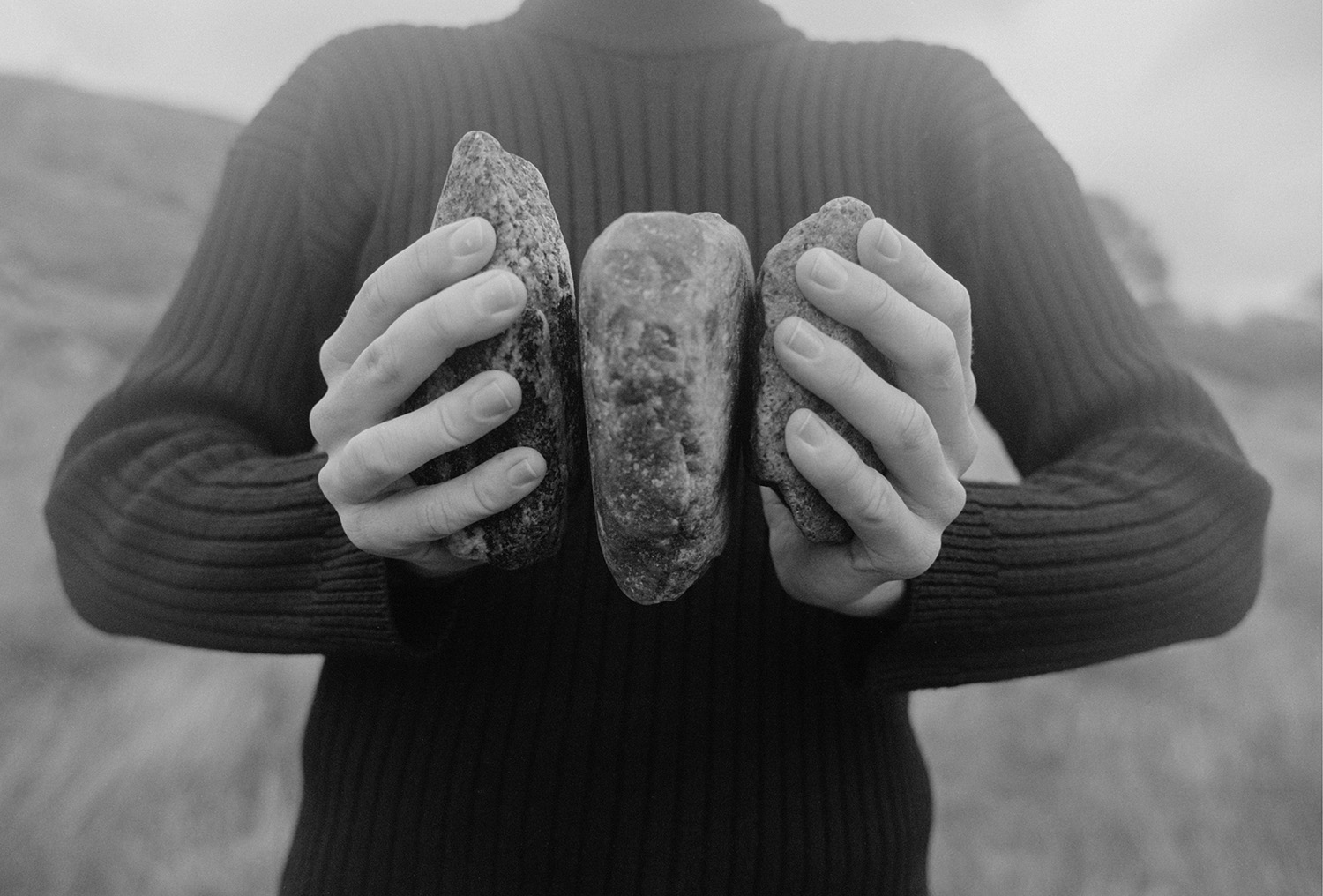
I realised when the face is removed, the pressure to perform identity often loosens. I guess it is because the face is, after all, our most public frontier. It is where identity is concentrated and where others expect recognition and performance. When a camera is pointed at the face, we suddenly become aware of everything at once. We rely on sensation alone: the tension of the mouth or the weight of the cheeks. However, we have no clear idea of what our expression looks like. We “feel” a smile, but we cannot see it. (Barthes was calling this smile “a faint, undefinable smile across lips and eyes”). And even if we could, would it truly help? The face has a life of its own, shaped beyond our conscious control. When the focus shifts to another part of the body, something changes. The subject is released from the demand to perform themselves because no one expects hands holding stones to smile, nor asks hair to express emotion. The parts of the body with the exception of the face are allowed to exist without carrying the full weight of identity, they can simply “be” without explanation or interpretation.
Through these experiences of photographing bodies rather than faces, I noticed a common quality among my people: there is less pressure to “look right” or to present themselves in a certain way. I hope and believe that I do not add to this pressure, but rather help create a space where it dissolves. I do hope.
Figure 3. Sokołowska Katarzyna, Untitled from the series Roll me, don’t curse me
Notes:
1 Bonnie Bainbridge Cohen, Sensing, Feeling, and Action The Experiential Anatomy of Body-Mind Centering, (Wesleyan University Press, 2012), p.40.
2 Roland Barthes, Camera Lucida, (Vintage Classics, 2020), pp. 10-11.
3 Carl Rogers, On becoming a person: A psychotherapists view of psychotherapy, (Robinson, 1997) p. 96.
4 Jennifer Higgie, Rineke Dijkstra Reveals the Artifice of Photography Itself, Frieze, vol 39, pp. 1-7. (1998), https://www.frieze.com/article/rineke-dijkstra-1998-review (Accessed 15.02.2026).
5 Aaron Schuman, Thirty and Dirty – A conversation with Ryan McGinley, (2007) https://aaronschuman.com/mcginleyinterview.html (Accessed 15.02.2026).
6 Nan Goldin, The Ballad of Sexual Dependency, (Aperture,1980) p. 6.
7 Roland Barthes, Camera Lucida, (Vintage Classics, 2020), pp. 10-11.
Image list:
Figure 1. Sokołowska Katarzyna, Untitled, 2025
Figure 2. Sokołowska Katarzyna, Untitled from the series Roll me, don’t curse me, 2025
Figure 3. Sokołowska Katarzyna, Untitled from the series Roll me, don’t curse me, 2025