AI = FANTASY = ESCAPISM = CREATIVITY (a text about fantasy, authorship, and trust in the image)
Text: Lisa Pettersson
”That’s not AI?
    You can save time with AI.
                  It is fantasy after all."

"I would’ve lost the meaning of why I create art
                                        in the first place.
 To call a work mine.
      But I cannot hide from it,
                because people are asking me nowadays if I’m real.”

                                             “Are you avoiding AI?”

"Escapism is important to me.
           But I think there is more to it.
                              I want to create hope."

"Nothing is black and white."

                                                            "True."
NO TURNING BACK
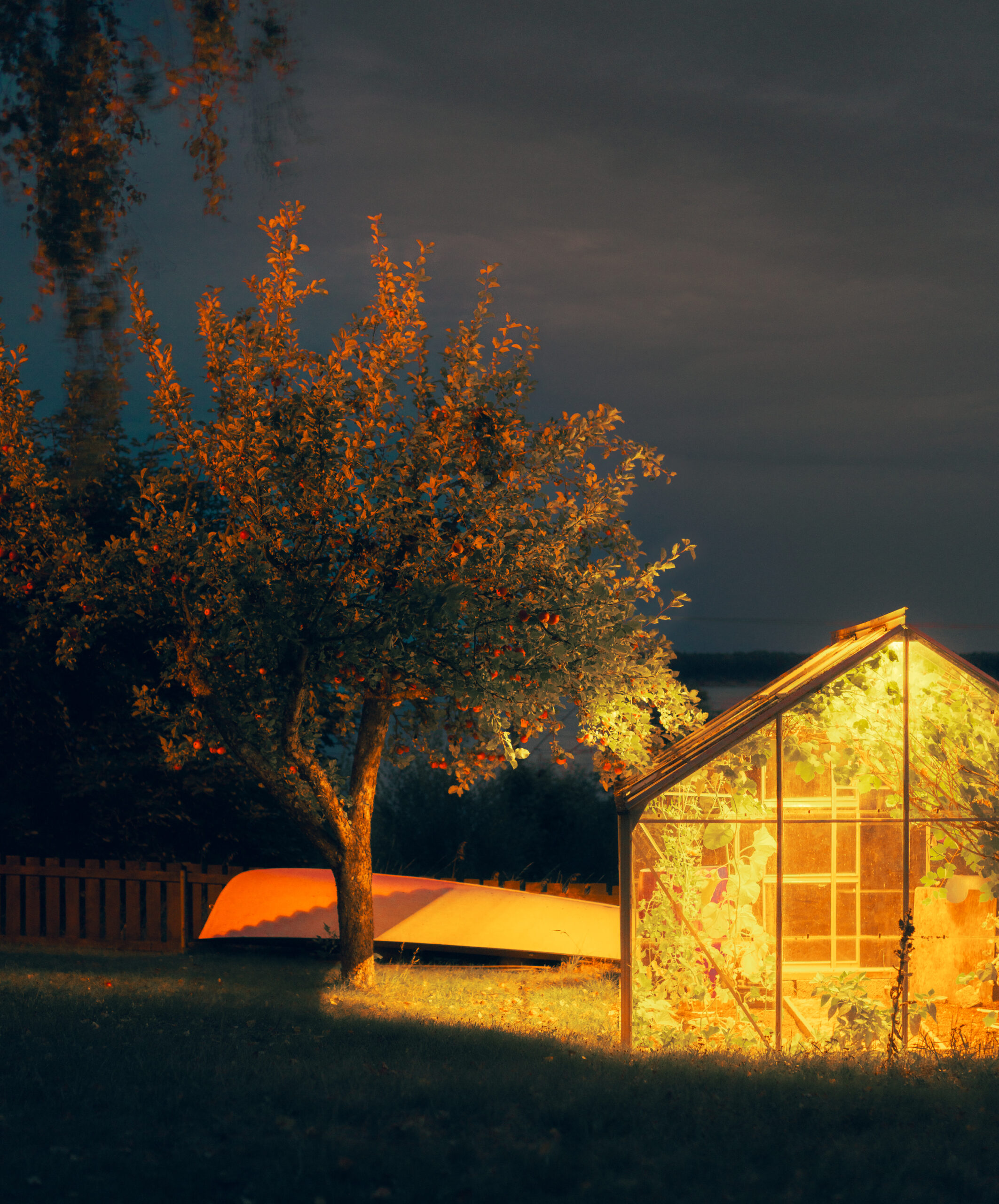
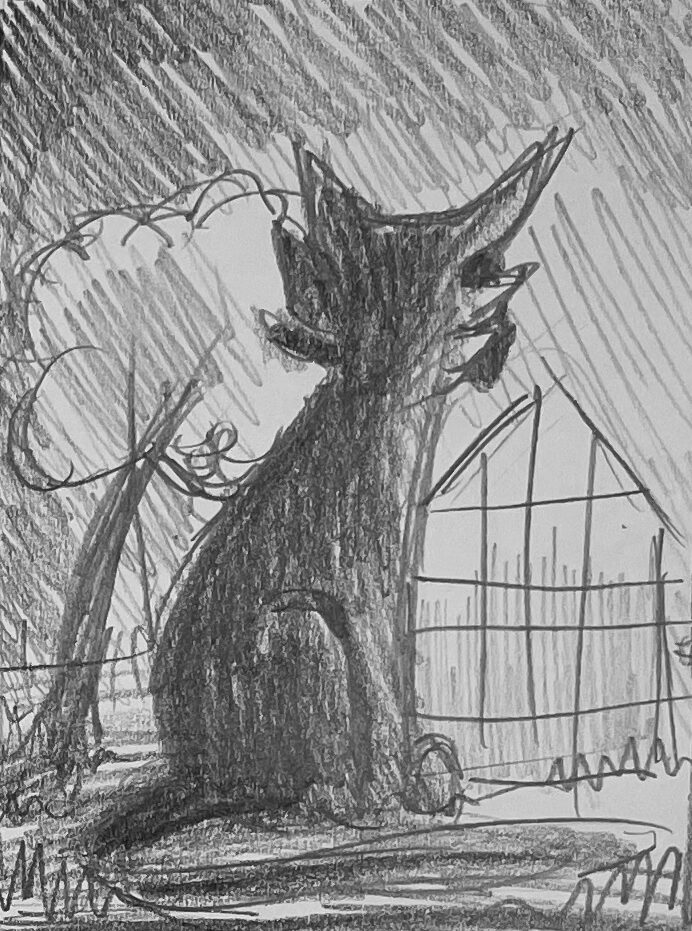
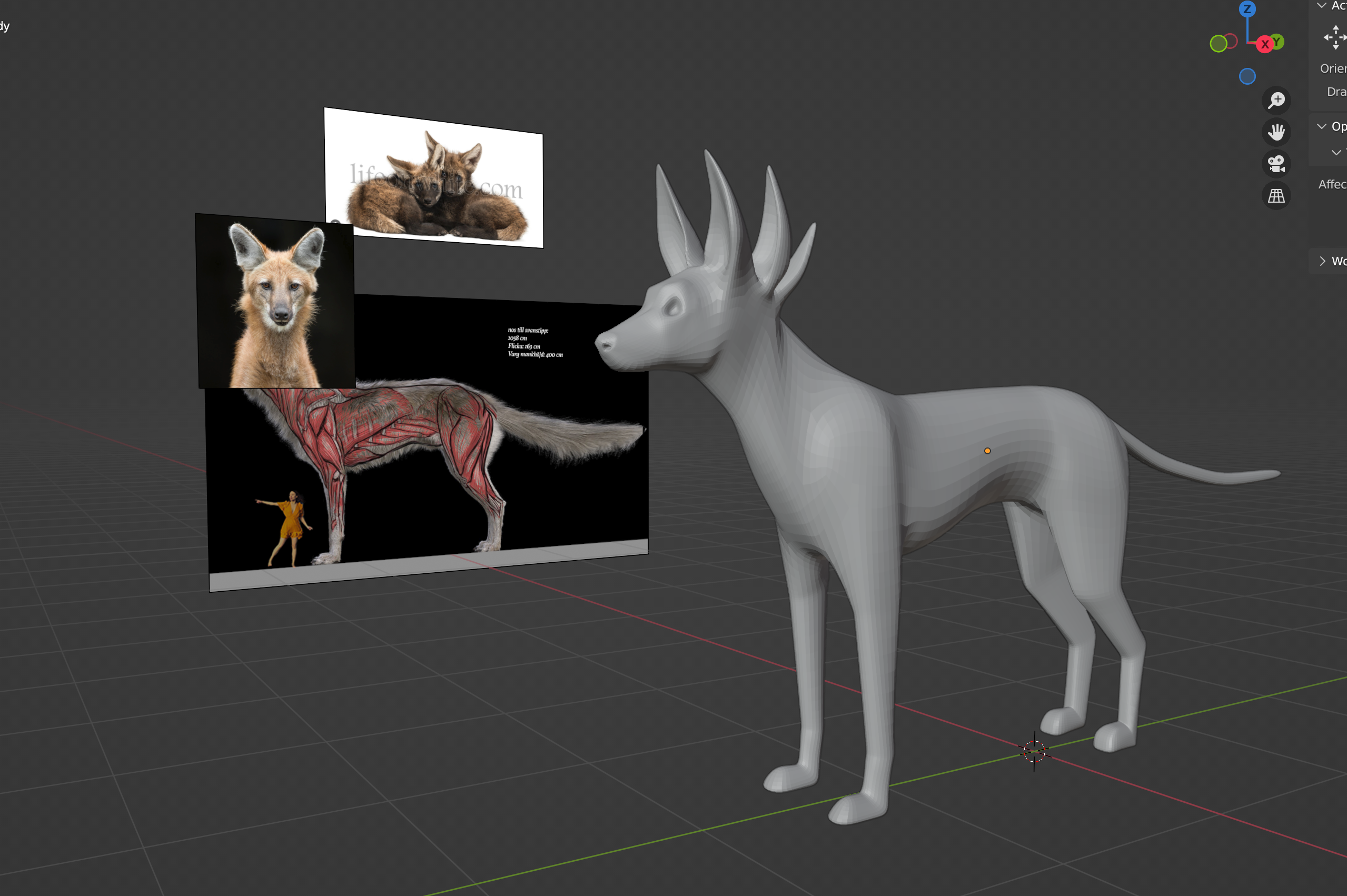
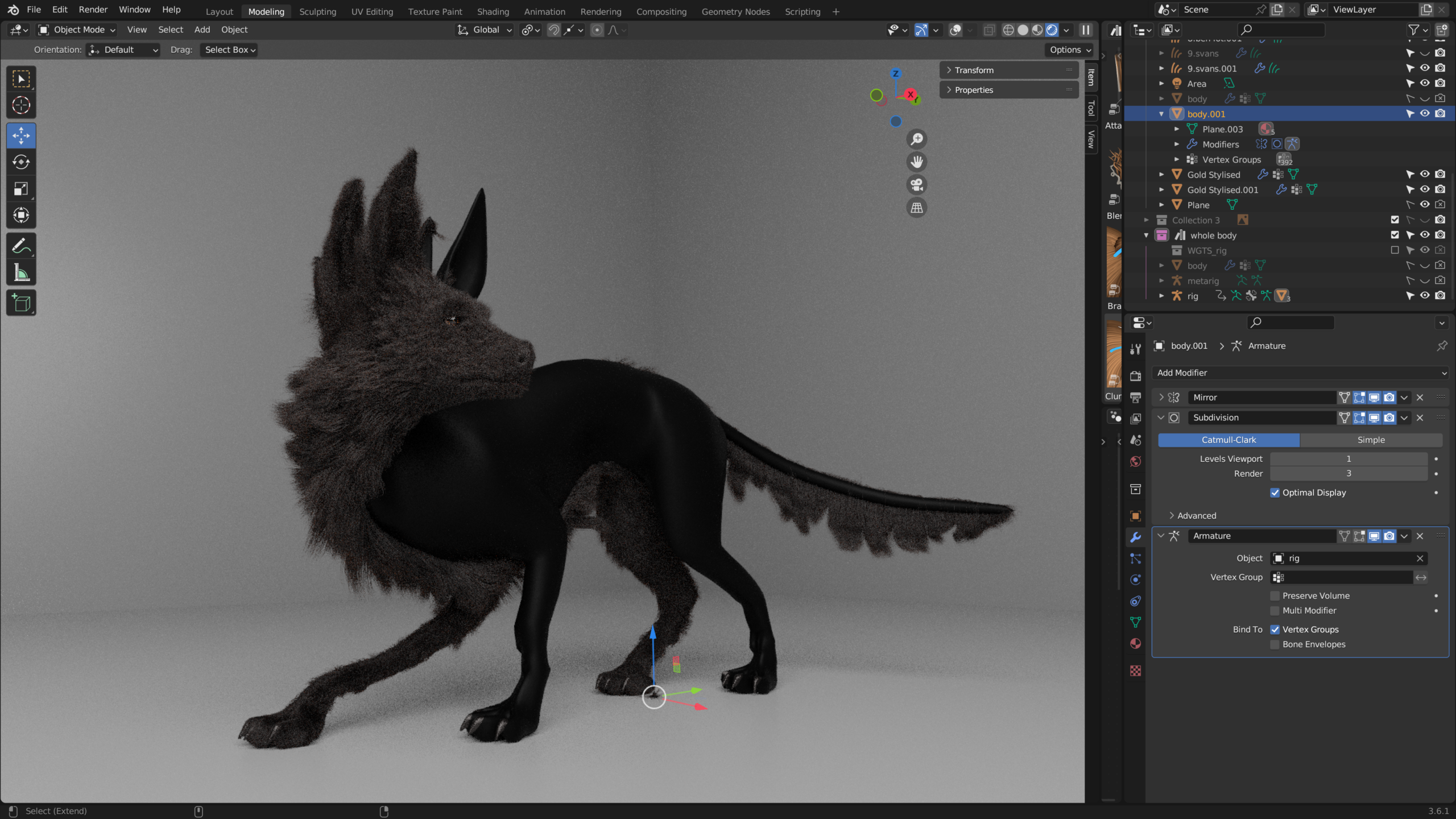
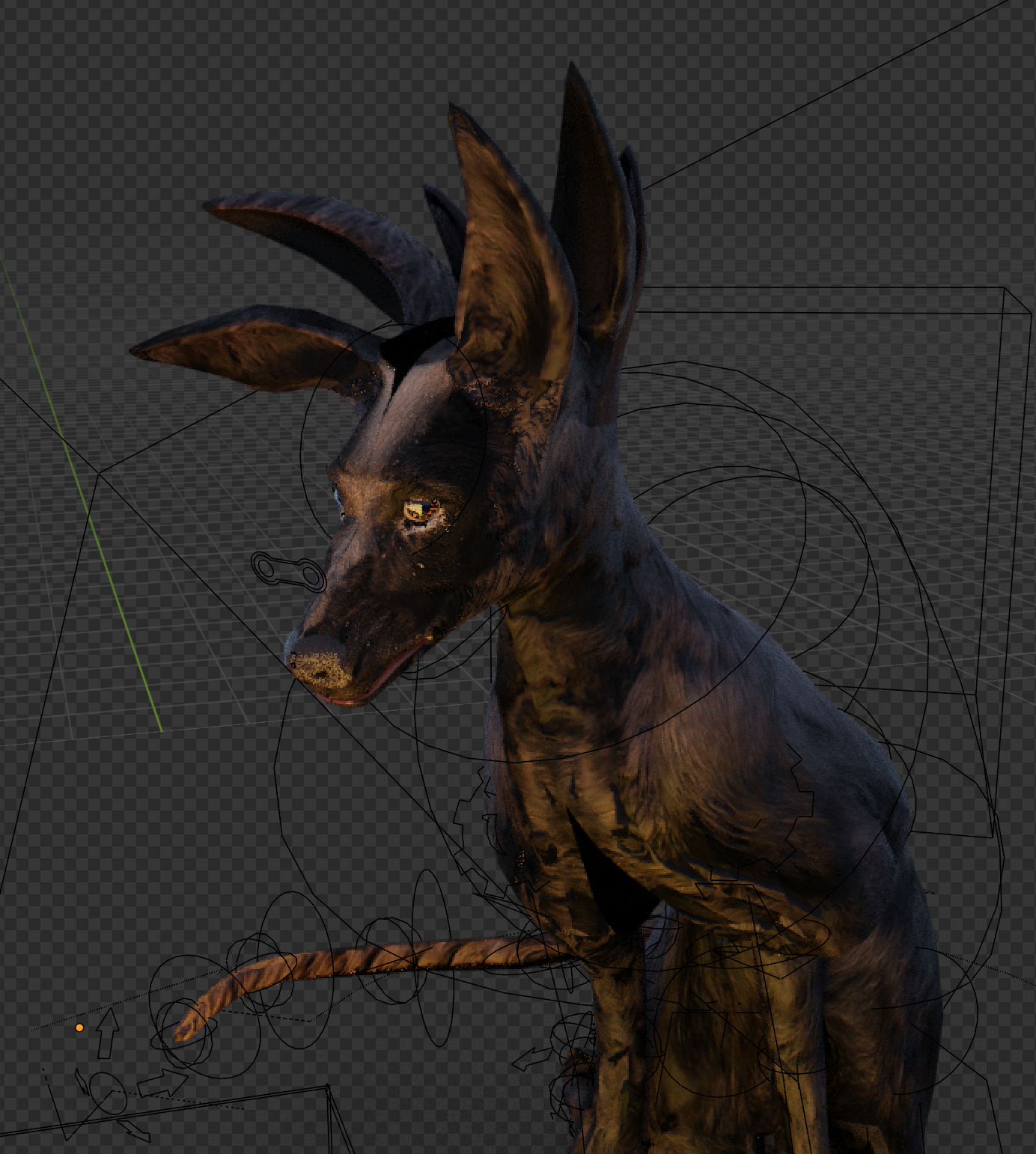
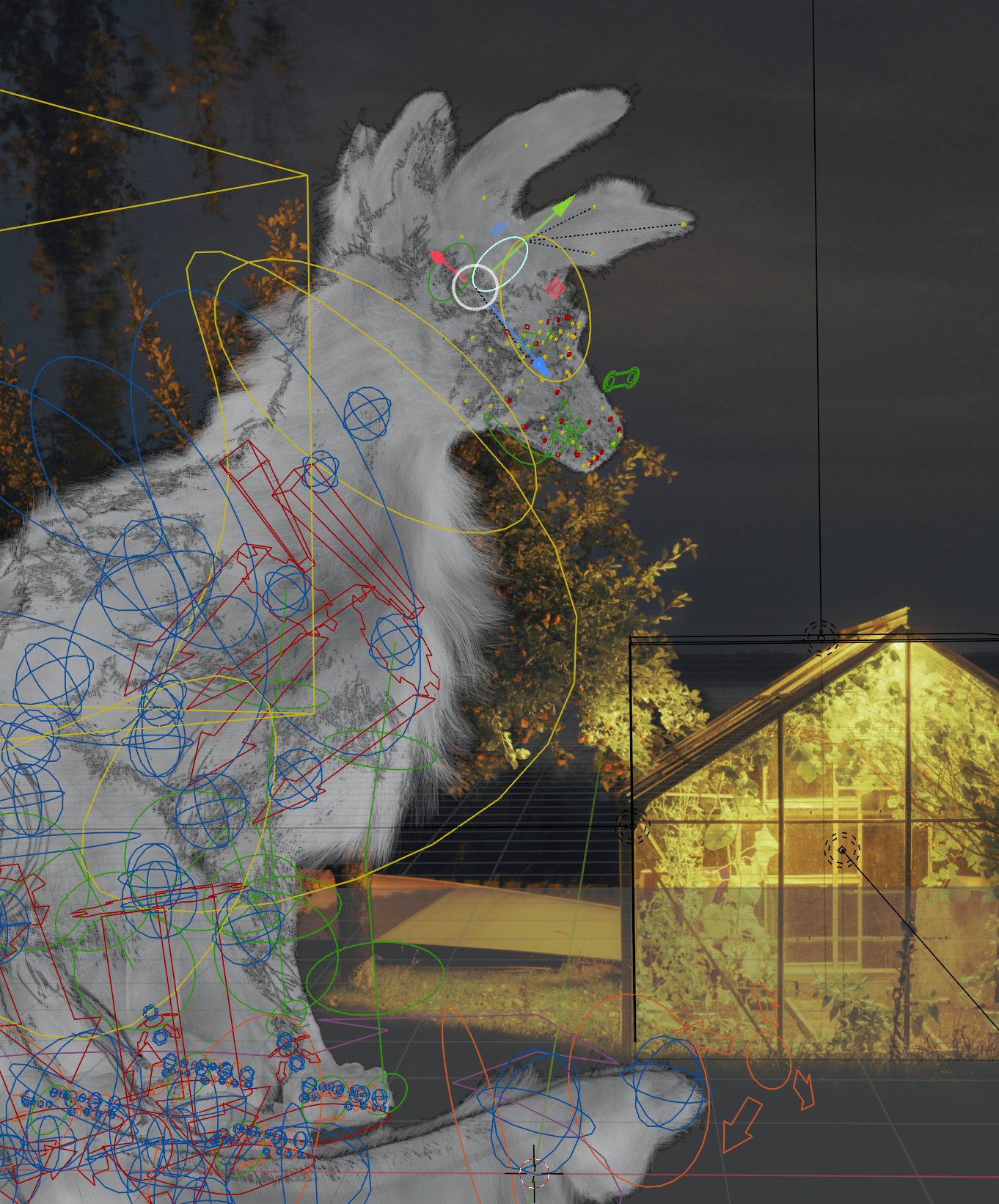
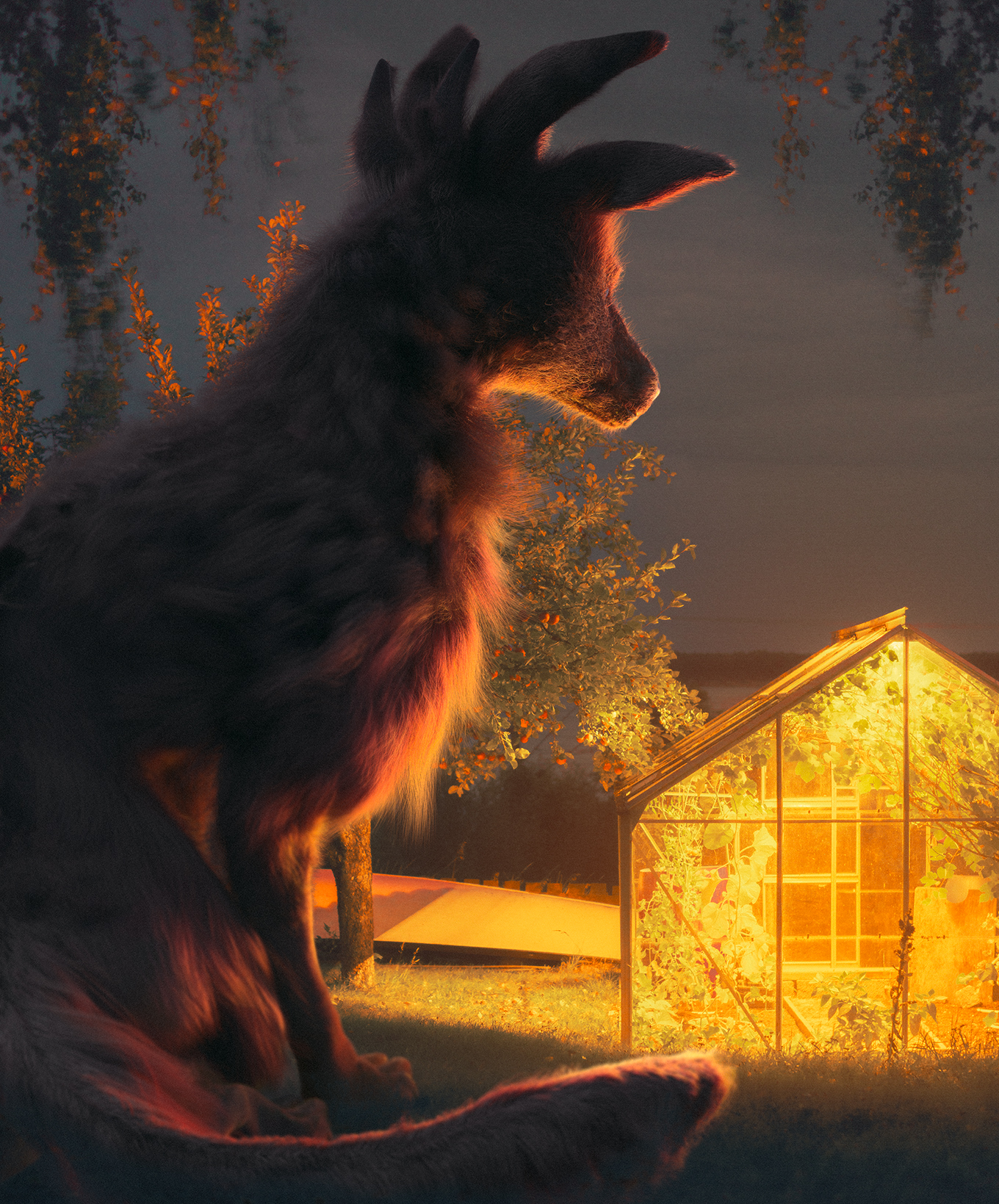
Over the past two years, as the popularity of AI has grown, I have been asked ‘Is it AI?’ Usually it is viewers who do not normally go to art galleries. In my works I am using my own photography, making digital montages in Photoshop and sometimes using 3D-softwares to create fantastical creatures and compose them into photographs. With this in mind, being questioned if my art is trustworthy in the first place to be interpreted, I have to remain open-minded — to understand why I am not using this new technology. This text asks what is lost when the first response to an image becomes suspicion rather than curiosity, and what it means to create fantasy by hand in a culture increasingly shaped by AI.
AI TOOLS IN TRADITIONAL PHOTOGRAPHY SOFTWARES
There are a few AI tools for photographers in Photoshop and Lightroom that have been around for a while, even before the broader AI boom. These include functions like reducing camera noise and masking objects in photographs. When describing images, it can feel unnecessary to mention these tools (unless speaking with another photographer) because doing so may lead the public to assume the entire image is AI-generated, rather than tools that are used by professional photographers every day.
These tools can feel acceptable because they cover processes that could also be done ‘traditionally’; the visual language would remain the same without them. The real difference is time. That raises a question: if efficiency is the main advantage of AI in image-making, why not use AI for more?
EXAMPLES OF ARTISTS USING AI
One artist who uses AI effectively and pushes the boundaries of visual storytelling is photographer and artist Arvida Byström. In one of her newest photo books, In The Clouds from 2024, she sold AI-generated pictures of herself naked to men on a platform similar to OnlyFans for four months. The pictures of her body vary from being uncanny, to looking like body horror, all while being surrounded by pink. And while AI images are much better today at mimicking realism, it knew what was needed to create a human by prediction. Her use of images and the AI chatbot reflects on modern society, social media and the objectification of women. Byström’s work shows that AI images can have artistic force when the use of AI is itself part of the meaning. It is important to note that because the technology of generating AI-images is so new and the fact that it is drastically changing the landscape of visual content, it will evoke strong emotions and arguments from all sides. Using AI-image generating as a tool (for now) is a statement itself and will be considered as a part of the artist’s message.
Another artist who has embraced AI images is the photographer and artist David Selander. He describes his series of AI-generated images like painting with photography. With these photorealistic works, we are meant to question the laws of nature, how we as kids fantasized what we saw in the clouds.
There is a lack of transparency and it is especially important when it comes to AI that challenges our way of seeing and the trust that stems from recognising traditional visual media. Traditional painting reminds us of painting as kids, and photography reminds us of taking family- and vacation photos for example.
Works like mine can sometimes feel confusing, but drawing comparisons with photography helps make it more relatable. Think of impossible moments to capture, like a sharp photo of an energetic dog, or a starry sky that results in nothing but picture noise. These shared experiences help create a connection with the viewer. It matters the way stories are told, and with what tools they are told.
Byström’s In The Clouds proves that AI images can have artistic impact. It works there because we do not really understand the future of AI. It plays on fear, fascination, human vs machine and a symbol of modern society. AI is given meaning because of the contrast to the human intention.
This feeling makes me think of The New Vision and Abstract of an Artist, by Moholy-Nagy Laszlo from 1947, where familiarity is described as a source of comfort because people tend to prefer what they already understand, seeking out images that reaffirm what they have learned to see.
This technology is too new for us to comprehend, and morally there are difficulties to accept it in the way it fundamentally works. Generating images would not be possible without the scraped databases of people’s digital footprint. Everything from selfies, videos, art and so much more — without consent. AI images hides the labour of others and obscures the biases of datasets, and on top of that there is the environmental question of the data-centers, creative diversity and twisted narratives within politics.
CREATIVE FREEDOM
A common argument for AI images is that it gives the user true creative freedom by eliminating resistance to specialized knowledge. In David Selander’s article in Editoriale Domani The Dawn of AI Interdisciplinarity, 31 March 2025, he describes AI as an intermediary that extracts specialized skills. Suggesting that creativity exists independently of a person’s technical ability, and would therefore enhance one’s creativity, by taking away the friction of having to learn or spend time: time that will instead be put into the creative vision.
I feel the opposite, and more broadly this points to a different understanding of creativity. When aesthetic decisions are given to a predictive system trained on others’ work, the artist’s role shifts from maker to selector, which, for my practice, feels diminishing. Technical competence is not a barrier to creativity but the condition through which creative thinking takes form. Learning and performing a skill is not a burden.
Selander’s argument of becoming more creative with the use of AI, does not translate to the viewer. If AI minimizes time and effort, it also reduces the perceived weight behind decisions. If everyone can produce polished images instantly, what once felt exceptional becomes ordinary, even more so with the image-datasets biases. If the artist feels more creative, it would not matter in the view of others, the viewer is navigating a saturated field where individual works struggle to stand out or carry significance. The use of AI-images can only gain weight if the intention of using the medium itself is thought out and presented to the viewer like Byström’s work.
A BROKEN TRUST
What matters most here is not only AI itself, but the broken trust it produces in the encounter with images. The reason why ‘being real’ matters for the viewer and why I dislike Selander’s lack of transparency in his interviews and biography about his artistic practice. When an image believed to be human-made turns out to be AI-generated, we feel cheated and it stems from a broken expectation of authorship and responsibility. What is lost is not the visual impact,but the relation to another consciousness behind the image. I feel like when the use of AI is not upfront, there is a question of why did one choose to not tell me? Was there a wanted reaction when I believe something to be made traditionally? Does that mean there is a higher change for me to buy a piece if I am deceived or to praise said artist? When I estimate the time and specialized knowledge someone has put into a work? Be amazed by the labour of a collaboration or an individual, the research, the travels, the stories that took to take a photograph. As internet users become more aware, we start to read images differently to protect us from misinformation. Instead of asking ourselves “What does this image show?” it has shifted to “Is this AI or not?”. I feel ashamed because I do it myself, and the tradeoff is distrust at first glance, real or not, for every image that has the slightest of signs.
There is a growing appreciation for art mediums, and interest and engagement in the artist’s process, which is a direct result of critical image analysis. Will AI image-making transform itself into being its own medium, mimicking other mediums or simply be a tool in the toolbox in the future? Who knows. The internal question of “Is this AI or not?” should instead be “How was it made?”, to be open-minded, but most important — to be curious.
THE ART OF ESCAPING TO FANTASY
My universe has always been a place I have escaped to in order to be amazed, hopeful and inspired by. A world where reality collapses into itself with me standing at the center while holding my heart, because: emotions are the realest thing I have. It is following me no matter where I am. Fantasy, for me, is not about abandoning reality, but recreating and healing it, and then in turn heals me. Fantasy allows me to return to reality and survive. Fantasy is created on my own terms, where I pro-actively construct my world.
When the viewer assumes my images are made of AI, I think it is because they have forgotten that artists put time into the things they love. But as I have tiptoed around for the whole essay: there is a spectrum of how much an artist usesAI for a project, and that fills it with creative intention. AI can also be used to criticize the very thing, be a reflection of today’s society or create a discussion between human and machine.
I create art at my own pace, and love every step of the process. My images may look unreal, but they are deeply human. The presence and passion I feel for my project would not have existed if I was not a part of it. In the state that AI images are today, I cannot see myself using it without losing the essence of what makes me: me.
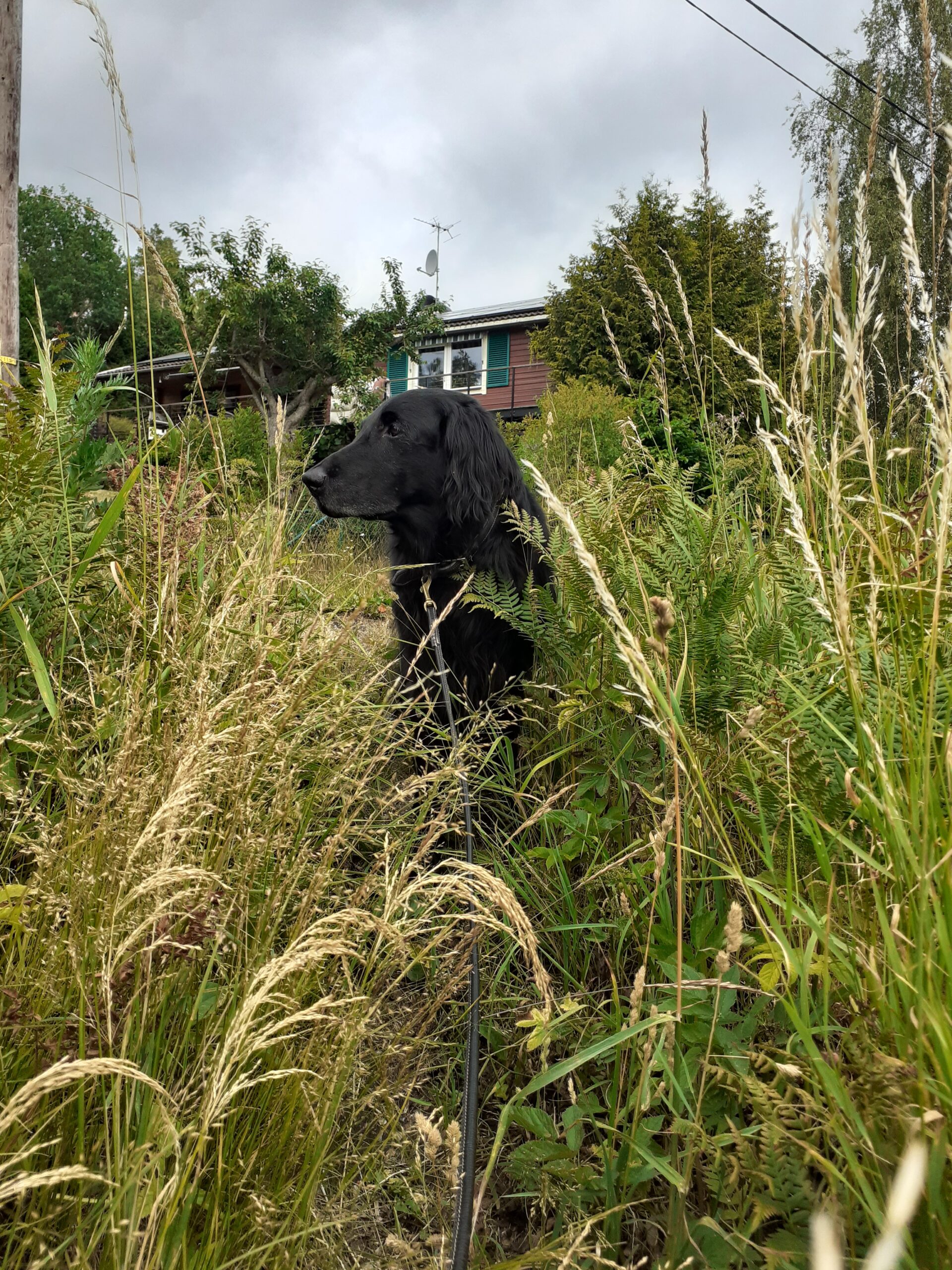
Pettersson, L. Last Year I Was Just a Puppy [Computer graphics]. (2025).https://www.lissonphoto.com/portfolio/iiii-expedition-jorden-2025 (Accessed 2026-01-07). Pettersson, L. Work in Progress Pictures of Last Year I Was Just a Puppy [Computer graphics]. (2025). [Own work in progress.]