

Going Where It Takes You (or, How to Photograph the End of the World)
Rethinking photographic practice through intuition, affect, and process
My answer was immediate and determined: “Yes.”
“I have finally come to terms with it,” I added, and she laughed at my remark.
In the past, I often struggled to call myself that. In everyday life, mentioning that I was a photographer invited the inevitable question of what my favourite thing to photograph was, and I never had a satisfying answer on hand. A constant doubt about what was relevant enough to photograph haunted me and made me question my identity as a photographer. Before even coming close to a camera, I would already dismiss the relevance of the photograph I was about to take. The disappointment I felt while working this way made me stop taking photographs altogether.
Nevertheless, the photographer in me lived on. When the urge to photograph suddenly appeared after years of resentment, I immediately followed it instead of overthinking. The feeling persisted, and a few days later, I was carrying my camera everywhere. Letting go of the expectation that meaning must begin as a fully articulated idea and allowing it to emerge through the act of photographing itself opened up the possibility to create freely.
This experience points to two central approaches within photographic practice: the planned and the intuitive. The planned approach assumes that most of the variables are known before the act of taking a photograph; an idea is first formed in the rational mind, describable in words. Most of the process happens before ever taking a photograph, and the image is a mere translation of the idea into visual language. The image’s meaning is predefined or constructed.
This suggests that the distinction between planned and intuitive approaches is not only a matter of method, but also influences how photographic meaning is formed. A key theorist of photography, Roland Barthes, touches upon this duality in Camera Lucida, when he introduces the concepts of Studium and Punctum and the relationship between them. The studium, or what was intended by the photographer, is almost always disrupted by the punctum, the unexpected, uncontrollable detail that pierces through the image. According to Barthes, what makes the photograph interesting is precisely this detail that the photographer didn’t plan for and that the viewer cannot escape. This is significant because it suggests that what gives a photograph its force may exceed prior intention and comes into being through the act of making itself.
From the spectator’s point of view, the notion of studium can be seen as the trained reading of a photograph, based on cultural knowledge that informs the viewer’s interpretation, while punctum is what breaks through it and triggers an unanticipated personal and emotional response. Speaking from his own experience of perceiving images, Barthes writes about the affective response that images cause in him. He describes how images ‘touch, prick, pierce and bruise him’, noting that feelings have a physical effect on him. ¹
One of the key contemporary authors on affect is the Canadian philosopher and social theorist Brian Massumi. His work explores the relationship between the content of an image and the effect it has on the viewer. In The Autonomy of Affect, Massumi introduces the concept of intensity as a form of arousal that indicates the activation of a non-conscious response. In other words, intensity is how affect is non-consciously felt in the body. Massumi’s arguments articulate affect as something that operates before interpretation, intention, or representation. ²
If this understanding of affect is applied to the creative process, it becomes clear that creation doesn’t necessarily begin with a clearly articulated concept, but can start from an affective impulse that finds form through gesture, material engagement, and action. Thought, reflection, and meaning-making follow later as part of the ongoing process of articulation. Affect and bodily responsiveness come before conscious thought, which means that action and feeling can emerge before reason has had a chance to intervene.
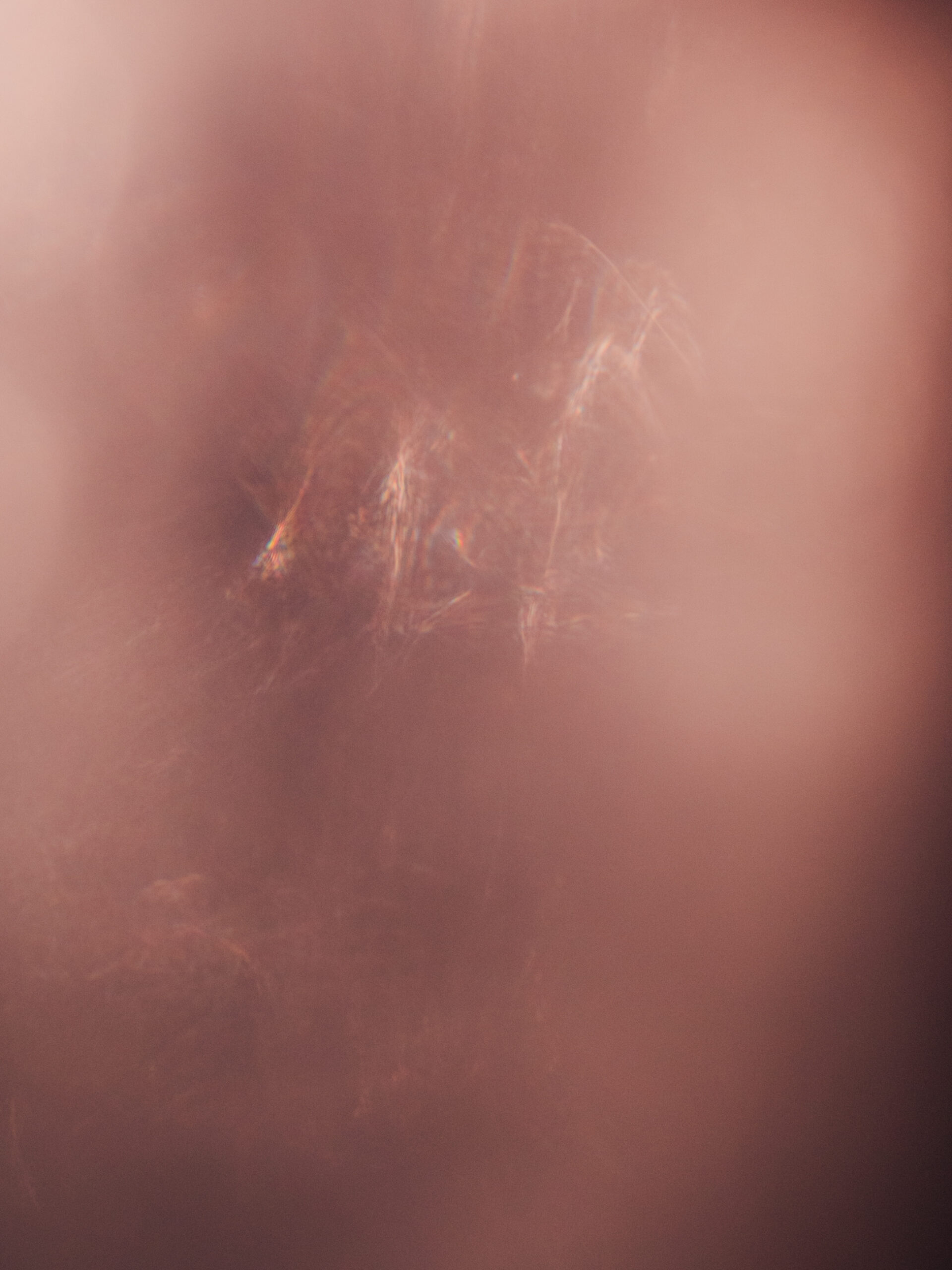
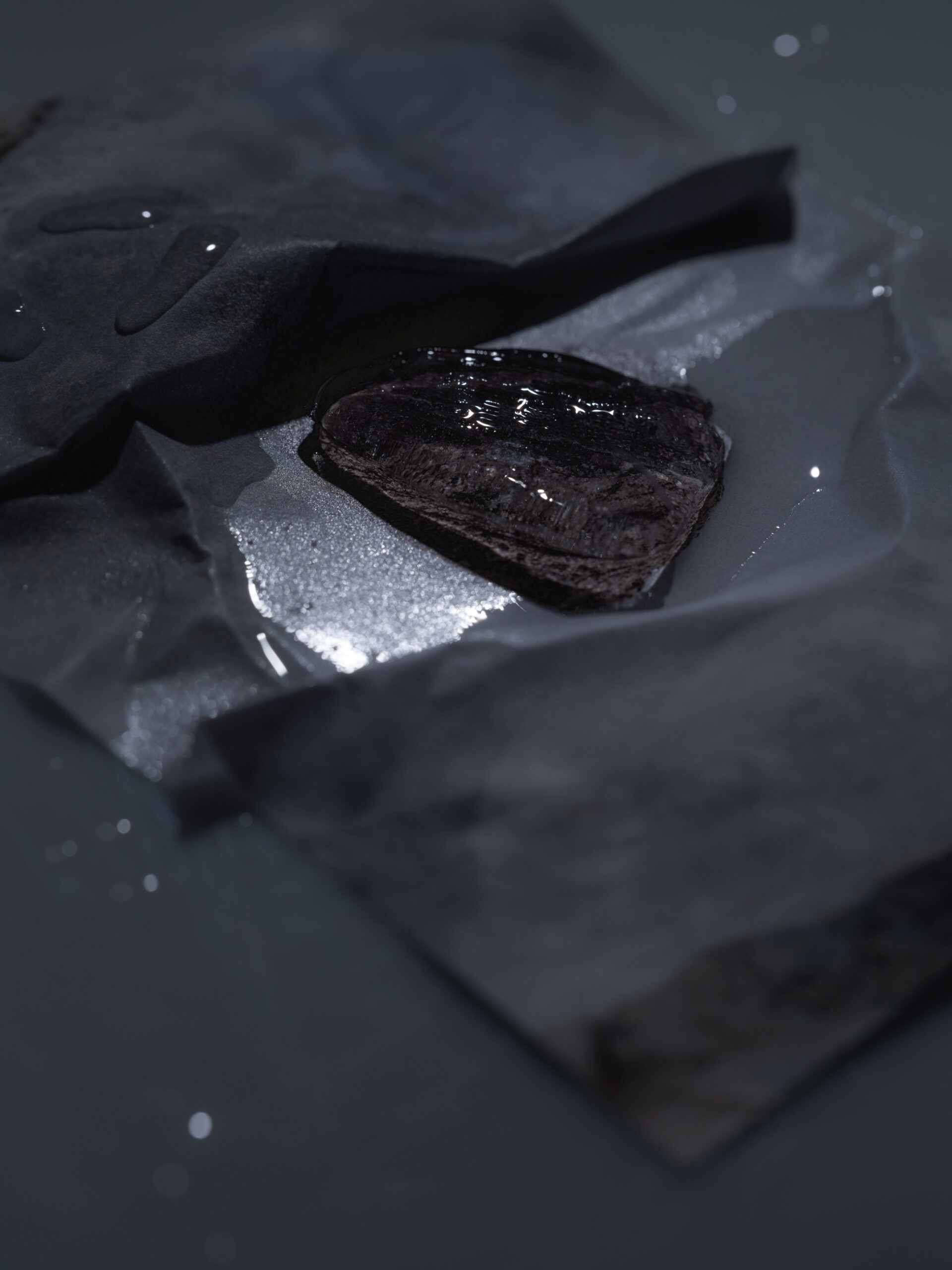
My ongoing project, The world has been ending for billions of years, emerged from this mode of working. It did not begin in the conventional sense, nor was it driven by a clearly articulated idea. It developed gradually through repeated acts of photographing details in my proximity that caught my attention, which I would have overlooked if it hadn’t been for my camera and my intention to take a photograph. These were not images of spectacular events or visible catastrophe, but fragments of environments close to me in which something felt slightly displaced. I chose to leave the images open, binding them only through the general notion suggested by the title of the project, allowing viewers to arrive at their own understandings. From this perspective, the project functions as evidence for a broader claim: that photography can generate meaning through attentiveness and later articulation, as well as the encounter with the viewer, rather than through a fully predetermined concept.
Working with photography does not require knowing in advance what the work is about, what it will look like, or where it will lead. Rather, it can give space for thinking through making and discovering the meaning along the way. Allowing oneself, as a photographer, to work from a starting point grounded in intuition and attentiveness can help us understand photography as a medium open to those fleeting, slippery qualities beyond the purely rational that draw us back to images again and again.
Notes
¹ Roland Barthes, Camera Lucida. (Vintage, 2000).
² Brian Massumi. ‘Autonomy of Affect’. In Cultural Critique, No. 31, The Politics of Systems and Environments, Part II (Autumn, 1995): 83-109.
Images
Mirjam Lamut, The world has been ending for billions of years, 2026.
__
This work was developed with the support of a scholarship awarded by the Ministry of Culture of the Republic of Slovenia.