
The Architecture of Nightmares: Photography as Visual Resistance
There is a moment in the shift between wakefulness and sleep when the rational consciousness begins to unravel, making room for something else. It is a fragile passage where the day’s impressions, fragmentary scenes from a film, flickering photographs or the final images seen on a screen, sink into the unconscious. For many this is a quiet preparation for rest, but this borderland can also turn into a place of a recurring and violent architecture. How are such nocturnal projections countered through the “functional photograph”; a methodology where the image acts as a visual anchor and a tool for nervous system regulation to reclaim safety?
Image Rehearsal Therapy and the Visual Resistance
In the search for relief, Image Rehearsal Therapy (IRT) offers a potential path. In psychology, IRT is a cognitive technique used to actively change a nightmare’s narrative. Traditionally this involves writing down the nightmare in detail and formulating a new, safer outcome to “overwrite” the terrifying scenario through waking repetition. For a distinctly visual person, a resistance to the written word often arises. Dreams are spatial experiences; they are moving images, not words on a page. Being forced to translate these fleeting visions into linear text can feel paradoxically too concrete. Written language fixes events in a way that makes the nightmare feel “real”, as if giving it a physical place in the world. The words etched onto the paper come too close to reality.
Psychiatrist Bessel van der Kolk, in his work The Body Keeps the Score, provides scientific backing for why verbal processing often fails. He argues that linguistic parts of the brain can become blocked during intense experiences, while bodily and visual methods reach the systems where the trauma is actually stored. Drawing offers a necessary distance. By first drawing the nightmare and then visualizing and drawing a safer outcome, a form of processing is created that speaks the dream’s own language. This makes it possible to approach the terrifying without becoming lost in it.
The Power of the Image
The connection between what is seen and what is dreamed is central. It is common advice to avoid violent or destructive imagery before bed to spare the unconscious, as these images serve as raw material for nocturnal projections. This issue of image-power brings to mind the cultural critic Susan Sontag’s reasoning in Regarding the Pain of Others. Sontag discusses how constant exposure to suffering risks marking the viewer deeply with the violence of images. In this context, image exposure becomes a catalyst; the images let in before sleep act as the architectural building blocks for the nightmare’s environments. Sontag’s warning about how images “haunt” the viewer becomes literal here; seen images are transformed into the rooms one is forced to inhabit at night. The most striking aspect of nightmares is how they linger in the body. They can color an entire day with a psychic heaviness and physical discomfort that is difficult to put into words. It is both horrific and fascinating how these abstract, illogical nightmares can exert such a tangible grip on a rational existence.
The Functional Photograph as an Anchor
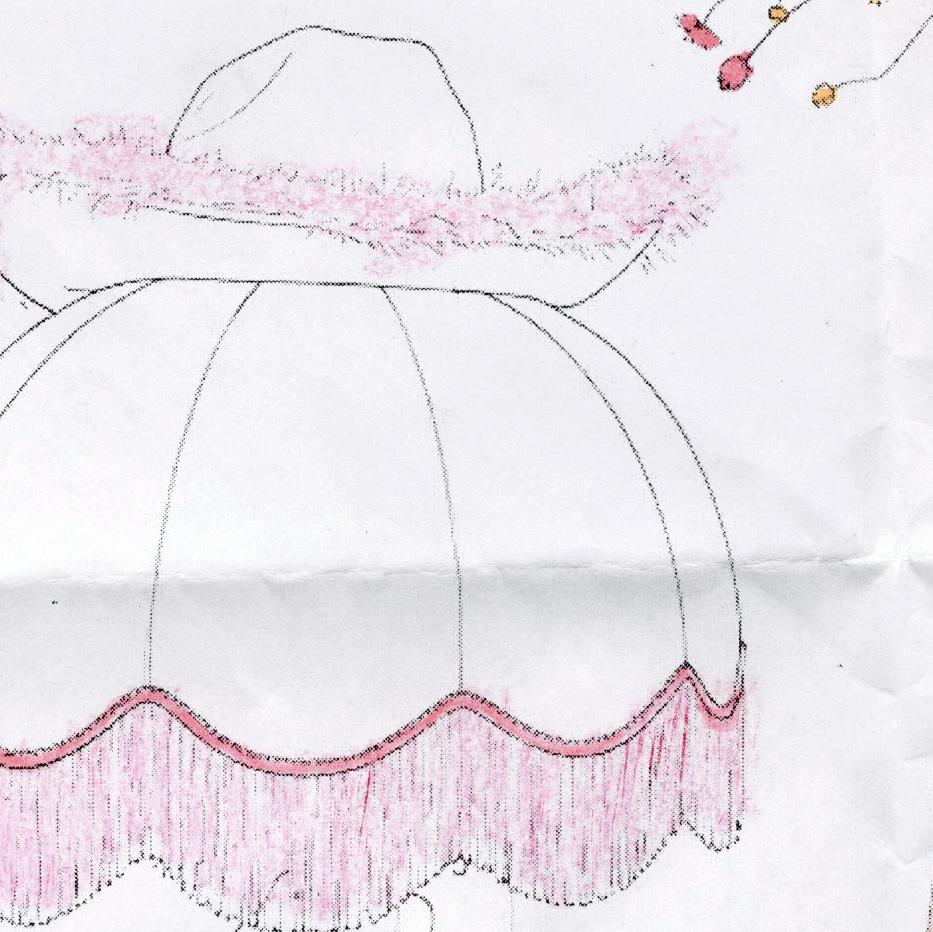
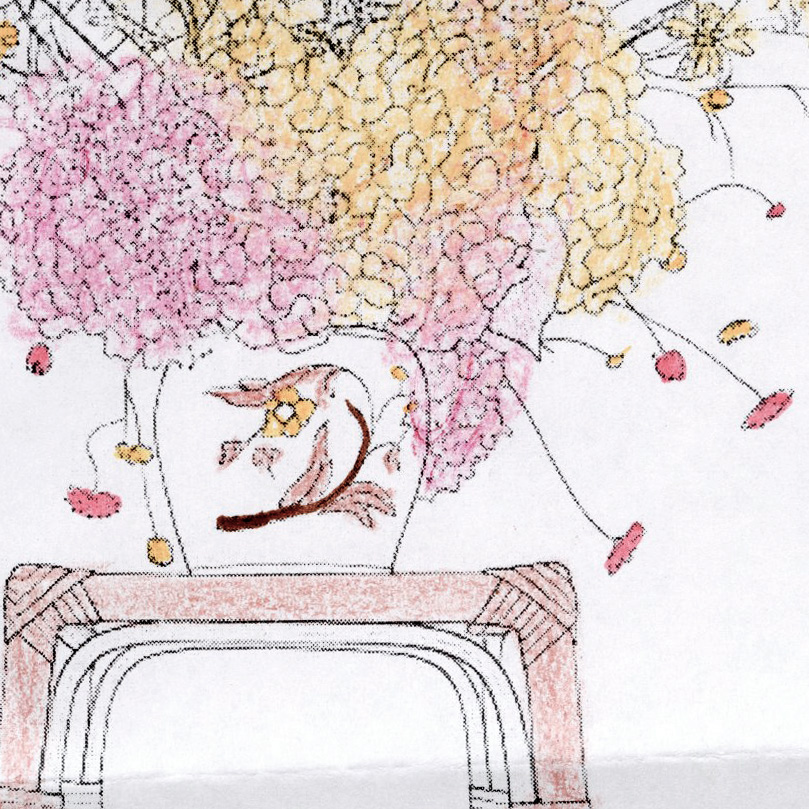
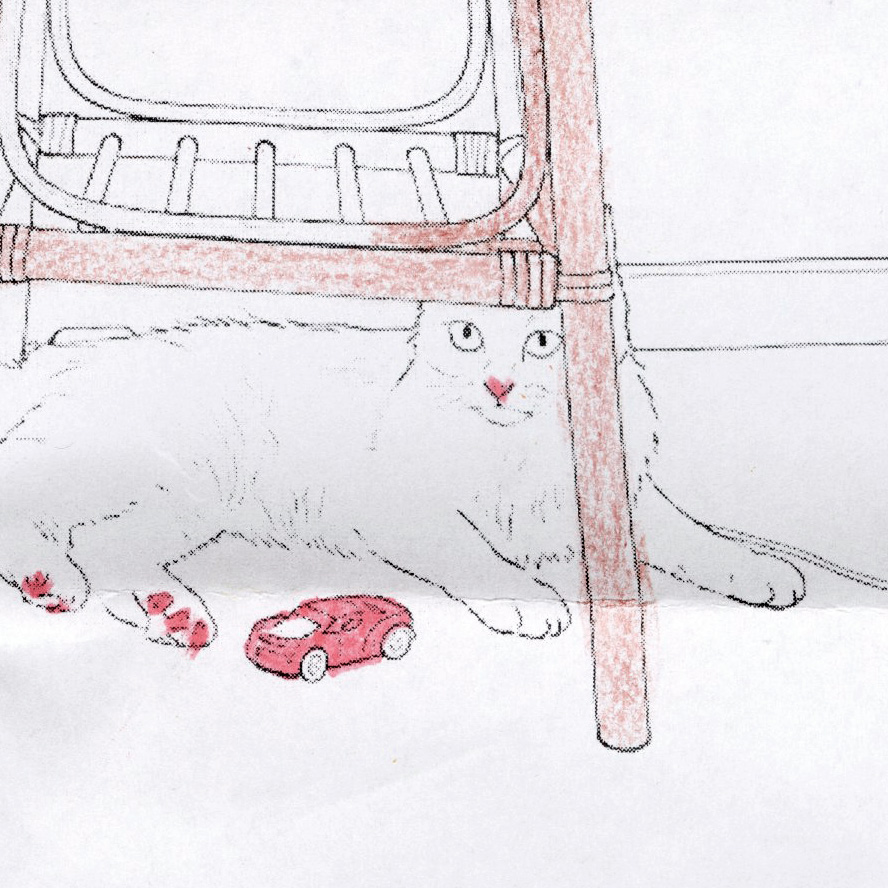
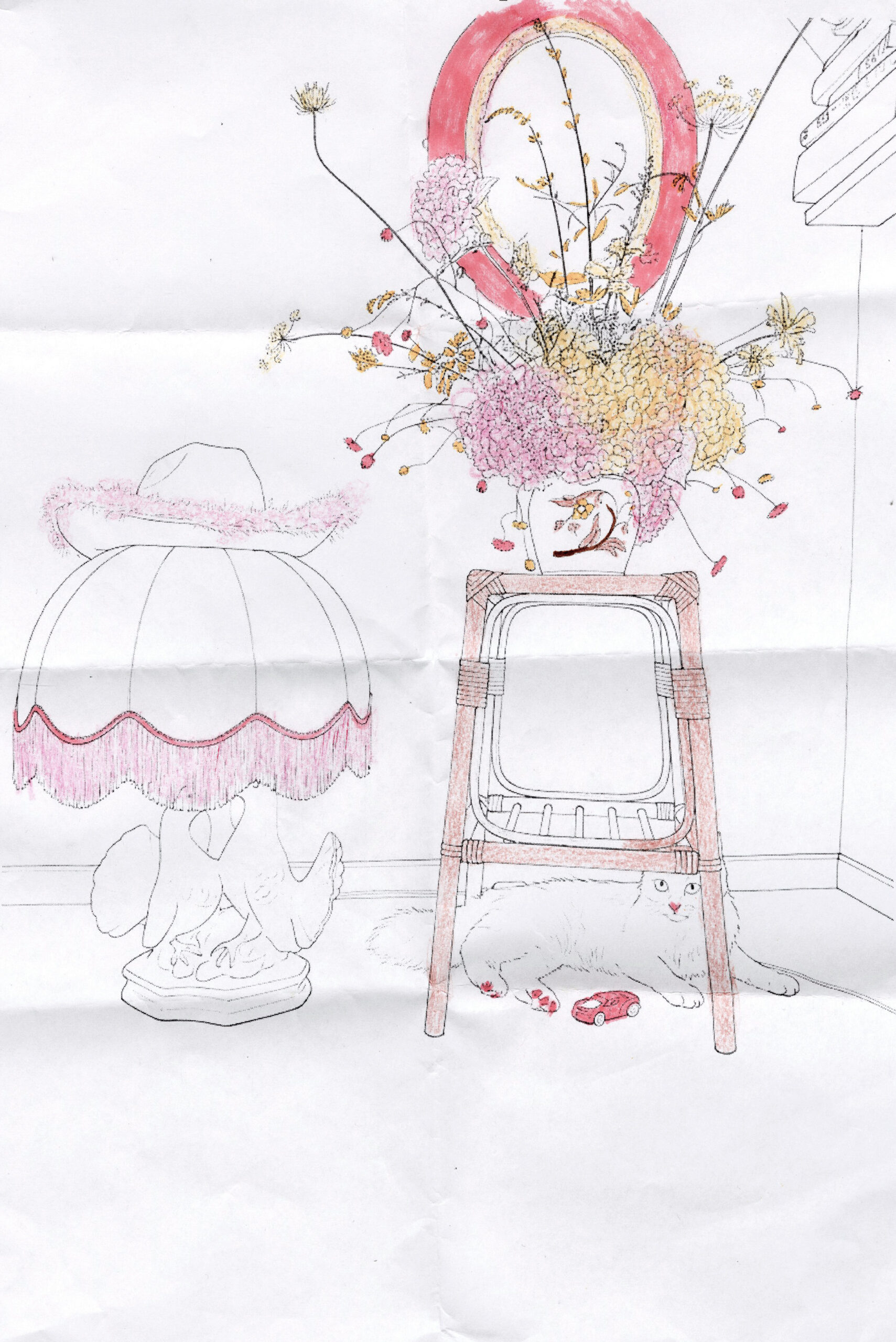
In the search for a visual counterweight to the violent aesthetics of the nightmare, personal photographs serve as a concrete tool. By selecting images from the safest contexts, such as photographs of safe places and loved ones, a visual catalog of emotional security is established. This acts as a shield against the destructive image flows that otherwise dominate the unconscious. To make these photographs interactive, they are processed into line renderings. By reducing the photograph to its contours, the image is no longer a finished, static object. What remains is an open structure that requires an active presence to regain its color and completeness.
This method functions as a conscious programming of the visual apparatus before sleep. The photograph undergoes a functional shift; it is no longer an object for aesthetic appreciation, but a form of nervous system regulation. In photographic theory, particularly Roland Barthes’ thoughts in Camera Lucida, the image is often discussed as evidence of the past. Barthes emphasizes the indexicality of the photograph; the fact that light has actually touched the subject. There is a physical connection to what has been there. When these contours are colored, one touches a reality that has actually existed, unlike the nightmare, which is a fiction.
Images:
Fig 1. Josefin Johansson Hedman, 2026.
Fig 2. Josefin Johansson Hedman, 2026.
Fig 3. Josefin Johansson Hedman, 2026.
Fig 4. Josefin Johansson Hedman, 2026.
Fig 5. Josefin Johansson Hedman, 2025.
Notes:
[1] Bessel van der Kolk, The Body Keeps the Score: Brain, Mind, and Body in the Healing of Trauma (New York: Viking, 2014).
[2] Susan Sontag, Regarding the Pain of Others (New York: Farrar, Straus and Giroux, 2003).
[3] Roland Barthes, Camera Lucida: Reflections on Photography (London: Vintage, 1993).