Why Look at Cows: On Bovine Gelatine and Photography
“Each shudder of grain comes with the castration of a calf, or every golden-hued light leak is made possible by a half-conscious cow – bleeding out on the slaughterhouse floor. In an ecologically-centred future, the implications of each ‘trans-action’ are unavoidably evident, and the inimitable beauty of film cannot be divorced from the well-documented misery of animal agriculture. Although more distant, the blood drips from our lenses as it does from our forks.”
— Edd Carr, Ecology of Grain (2019, p. 56)
Prelude
Formulated from the larger body of my MFA thesis, this article is an attempt to synthesise some of the work I’ve been doing to untangle the ethical messiness of my own photography and artistic practice roughly over the past five years, especially the more material systems that exist within. For more on this messy untangling, I gently guide you to the thesis work titled: Flower Power Photography: (Un)Conscious Materialities, Collaborative Workshops, and Cows. But for now, I’d like to put all of the photographic spotlight brightly on the beings that need, and deserve it the most.
A Medium in Most Need
It’s truly impossible to avoid the enormous microscopic impact of mundane individual actions, such as using a roll of film [1]. To paraphrase T. J. Demos: art, in its most ambitious and far ranging sense, must present new ways of comprehending ourselves and our relation to the world that depart from the destructive traditions of colonising nature, as seen in capitalist models [2]. Art’s materiality is the crucial but often neglected element of any process of artistic representation, and artists must pay rigorous attention to the form of process as they are collaborating with nonhuman actors – if the process causes harm to said actors, or damages life-sustaining ecosystems, then it must be considered a medium in need of “ecological transformation”[3].
This article argues that the photographic medium from a broad lens can, should, and must be considered one in need of ecological transformation. Its materialities, and suffering subsequently caused reveal this explicitly. To see why, we’ll turn towards the analogue, where we need to and have to, look at cows.
“Advice for Vegans”
Many photographers (digital and analogue) – until recently myself included – are largely unaware that for well over a century high-grade gelatine created from cow bones known as Type B Ossein Gelatine has been considered required for analogue photographic film and paper, specifically for the silver gelatine process, invented and published by Dr. R. L. Maddox in 1871.
In fact, still to this day, there are no film-stocks or light sensitive photographic paper on the market that do not contain gelatine. Zero alternatives. Vegan UK artist Edd Carr attests that leading film manufacturers repeatedly confirm that there are no viable plant-based alternatives, as with edible gelatines. Ilford Photo, one of the global market leaders of black and white film, offer some “advice for vegans” on their website in which they state that bovine gelatine has unique characteristics which act as a membrane matrix for the silver crystals but also interacts with the crystals as they are formed, and substitutes have been attempted such as vegetable substitutes, however none perform to the same standard as bovine gelatine, as they are “fragile, slow and have a short life” [4]. For reasons such as these, a patent report by Ivan Tomka largely confirms that the current production of analogue photographic film, paper, and emulsion is entirely dependent on gelatine that is extracted from the bones of slaughtered cattle in the meat industry [5].
Leading German manufacturer of silver halide products, ADOX, have long argued that the use of photographic film is a philosophical question that they “cannot answer”. However, on a page titled: “May I use film if I am a vegan?” [6], they make their case for why the gelatine they purchase and use should not be an issue for vegans, coming to the short conclusion that they actually have no responsibility in the matter – apparently as a consumer it is simply “your decision”. They even go so far as to state that gelatine is the “product of choice” for those who are “generally interested in this planet and sustainability”, citing little evidence to support the argument and no references to follow up on.
On the contrary, I’d put forth that choosing a product that actively participates in the slaughter of hundreds of millions of beings every year, and an industry that so negatively and harmfully contributes to our environment, is arguably not the “product of choice” for those generally interested in this planet and sustainability – it’s clearly a product of un-sustainability, horrifically so for a mere photographic binding agent. Let me elaborate.
“To take a photograph is to participate in another person’s mortality, vulnerability, mutability.”
— Susan Sontag, On Photography (1977)
1,164 (Cows)
Mortality, as famously noted by Susan Sontag [7], is explicitly seen in photography through its use of gelatine that the scale in relation to the mediums use alone is difficult and heartbreaking to comprehend, which is perhaps one reason why the industry is so set on looking away and deflecting responsibility. In 2019, Acumen Research and Consulting predicted that the demand for bovine gelatine was predicted to rise to 85 kilotons by 2025 [8]. On this estimation, consumer film stocks last year alone needed 1,164 cows for bovine gelatine [9]. That’s 1,164 sentient beings slaughtered to bind a gelatinous image onto a roll of film; not even accounting for the demands of the whole photographic industry.
Granted, the numbers were relatively higher at the peak of the analogue photography era [10], and one cow skeleton can coat thousands of film rolls [11]. However, given the rising resurgence of photographic film and its deeply connected ties to the gelatine industry, the once more climbing death toll is not to be taken lightly. One single cow slaughtered or even harmed for the sake of photography, will always be one being too many.
(Not So) Innocent Byproducts
Unfortunately, most if not all industry actors justify the statistics above by arguing that the gelatine they buy and use is a mere “byproduct” of the meat industry, and that “no extra animals” are used in the making [12]. ADOX add that they “honestly” couldn’t replace gelatine even if they were given millions of dollars to do so. But, what they (dishonestly) fail to mention or acknowledge is the fact that animal byproducts contribute significantly to the profitability of the meat industry, and assist greatly in the costs of slaughter house operations and profit margins [13]. Without the sale of byproducts, it’s been proposed that the meat industry would likely endure an existential crisis [14], perhaps even collapsing entirely as it industrially operates within late neoliberal capitalism today. As historically, it was only by selling byproducts that animals actually returned as capital [15].
The presentation of photography as using materials that would otherwise go to waste is highly misleading, and could certainly fall under the category of ‘greenwashing’. In fact, since the rapid growth of photography at the end of the nineteenth century, photographic industries were no longer merely using byproducts but “producing a significant demand for them” [16]. Even as early as 1906, Upton Sinclair wrote: “they use everything except the squeal” [17]; alluding to the screams of nonhuman animals being the only non-profitable product for the rendering industry.
Thus, bovine gelatine isn’t a mere waste/byproduct scraped from slaughterhouse floors as the photography industry clearly and misleadingly suggests; it is a complex and carefully manufactured product that is violently and bloodily extracted from millions of sentient beings — cows.
Flower Power Photography
Informed, saddened, and deeply enraged by the commonly accepted arguments and practices of the industry, a key aim of the work I am currently doing is to fully understand the use of bovine gelatine in photographic practices and explore possible vegan and plant based alternatives. This work is carried out in collaboration with senior lecturer in photography at HDK-Valand Lasse Lindqvist, through the artistic research project titled: Flower Power Photography: Nonviolence, Resistance, & Justice through Alternative & Experimental Photography. This project has involved ethically, theoretically, and practically re-imagining photography and the darkroom as a space for collective experiences centred around community resistance; a space for hope and resilience, one that envisions a radical alternative photographic future that departs from photography as we currently know it today entirely.
Luckily, we are not alone in this quest. There are a number of wonderful artists, activists, organisations, and human beings who are working and researching within the space of ecological and sustainable photography. Even though the emerging space is currently small in number, it collectively finds shared passion, values, and a genuine openness to expand knowledge and awareness, centred particularly around community. To name just a few; this field includes the likes of Alternative Photography, Alternative Processes, Curioso Lab, Josephine Ahnelt, and Edd Carr & Hannah Fletcher at The Sustainable Darkroom who have published an array of collaborative publications that are incredibly helpful for anyone wishing to explore this field further.
An Alternative Photographic Future
The path of rethinking photography, especially without the vast exploitation of nonhuman and human animals alike – unthinkable by the largest actors in the industry – is a path that is best walked together. This text serves to light a metaphorical fire, in the hope of passing on the initial warning messages lit by those before me. A fire that soars so brightly amidst the murky photographic abyss that even the cows on distant farms, rendering plants, and slaughterhouse floors might be able to see that they are not alone.
But it comes with a critical message: more fires need to be lit. We must think beyond our current limits and in that process create a renaissance of an ecological, not only analogue kind [18]. One centred around nonviolence, community resistance, and environmental and social justice for all sentient beings — humans and nonhuman animals equally.
But especially, for the cows.
Images:
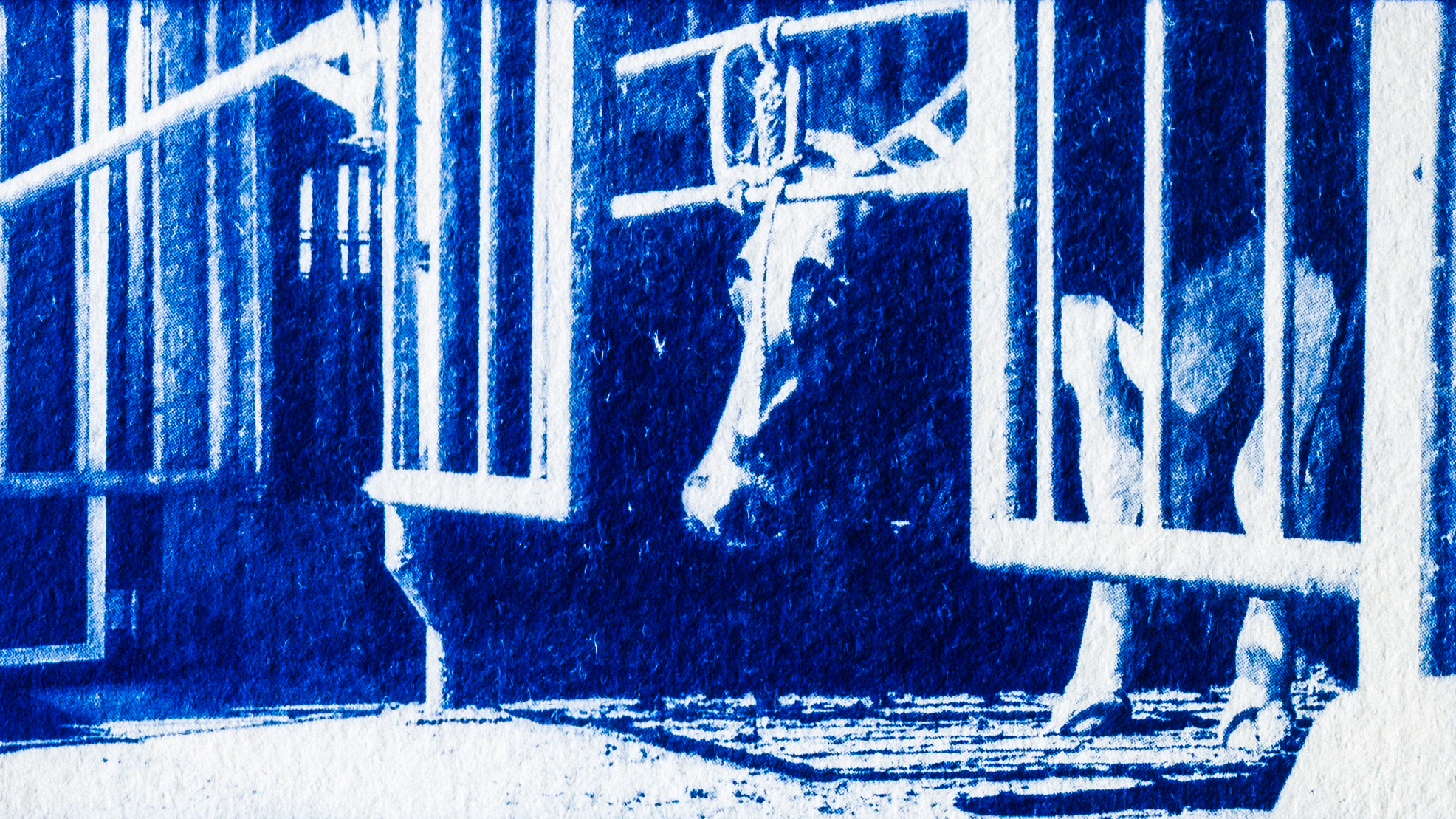
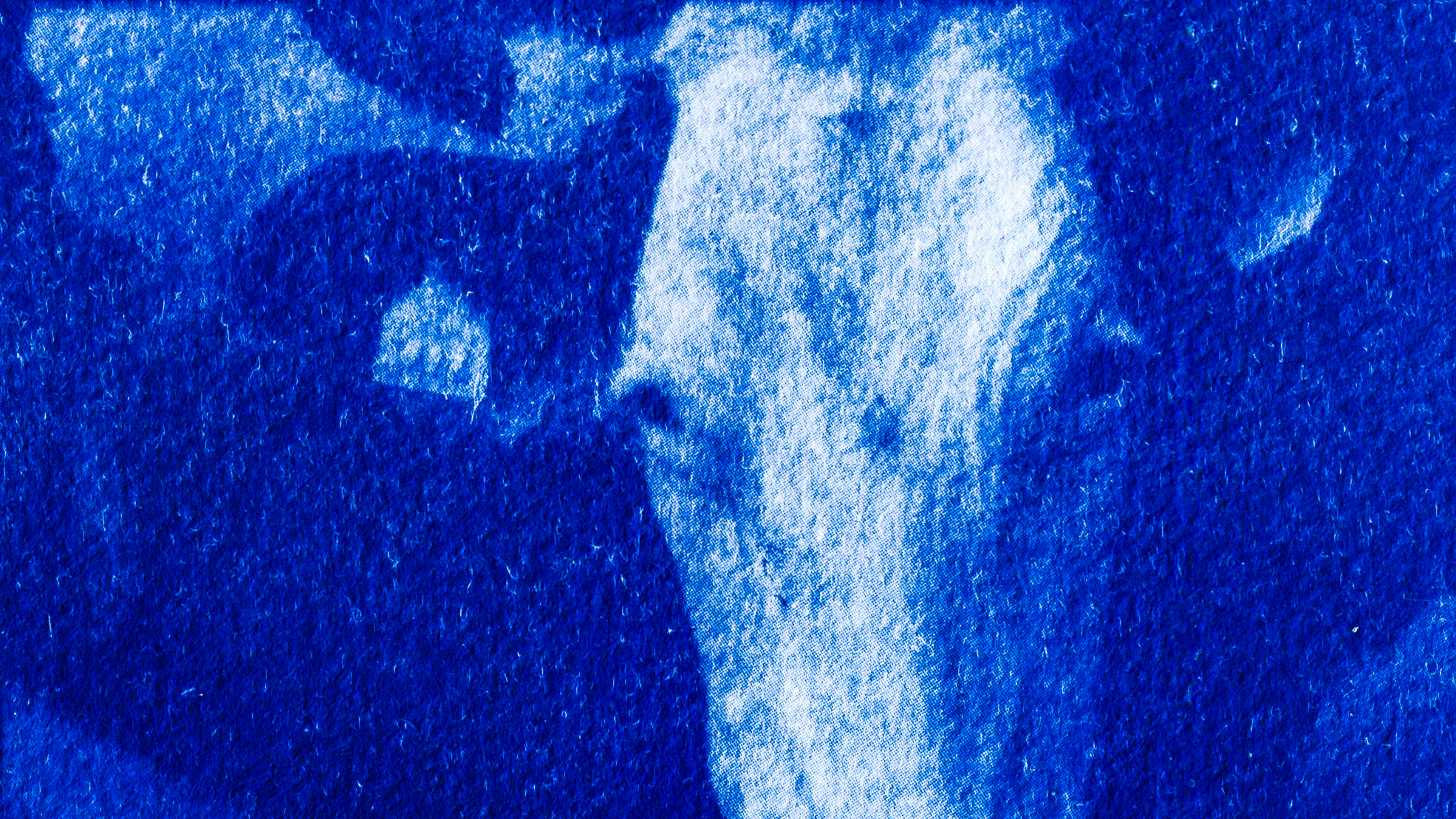
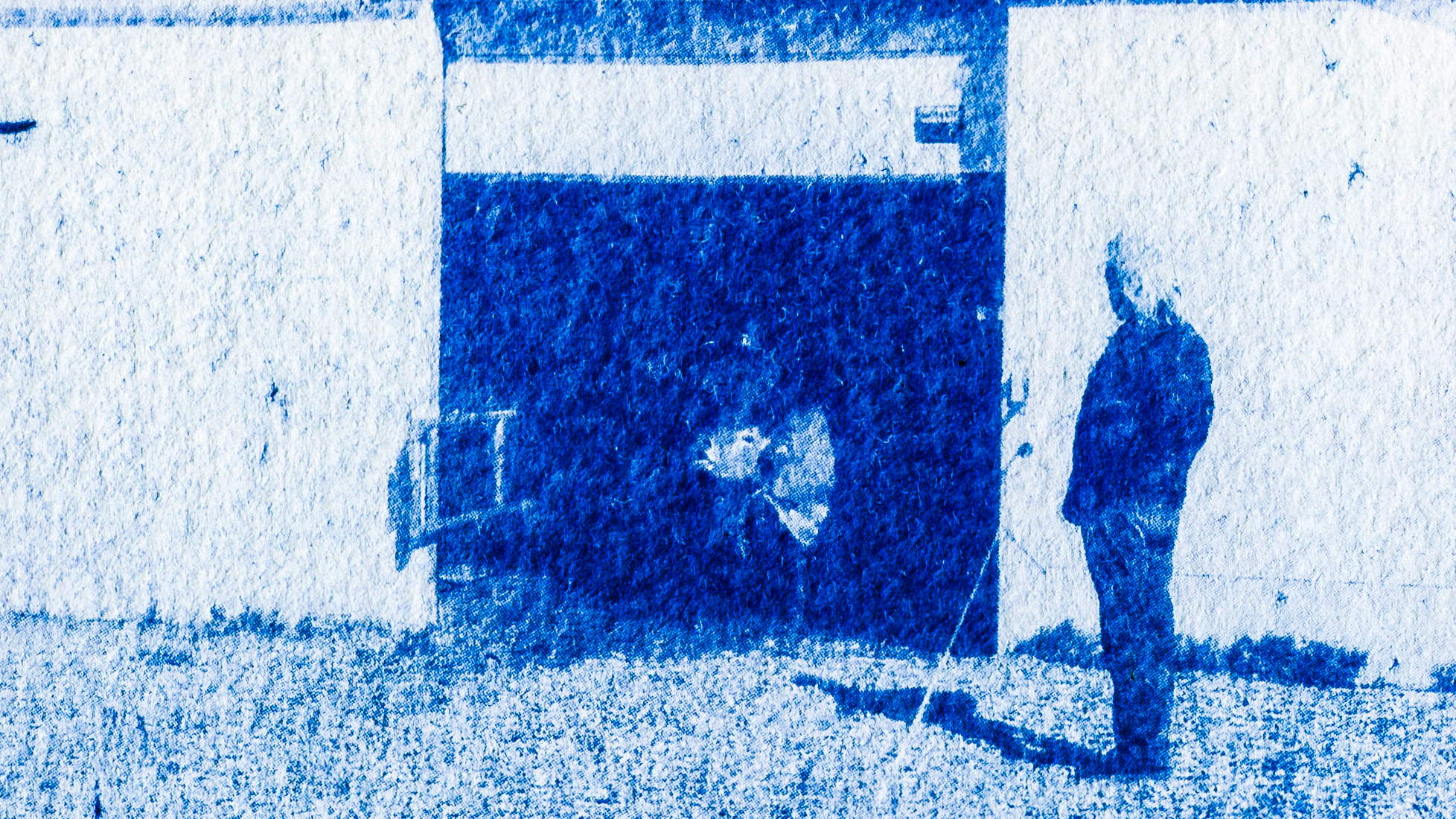
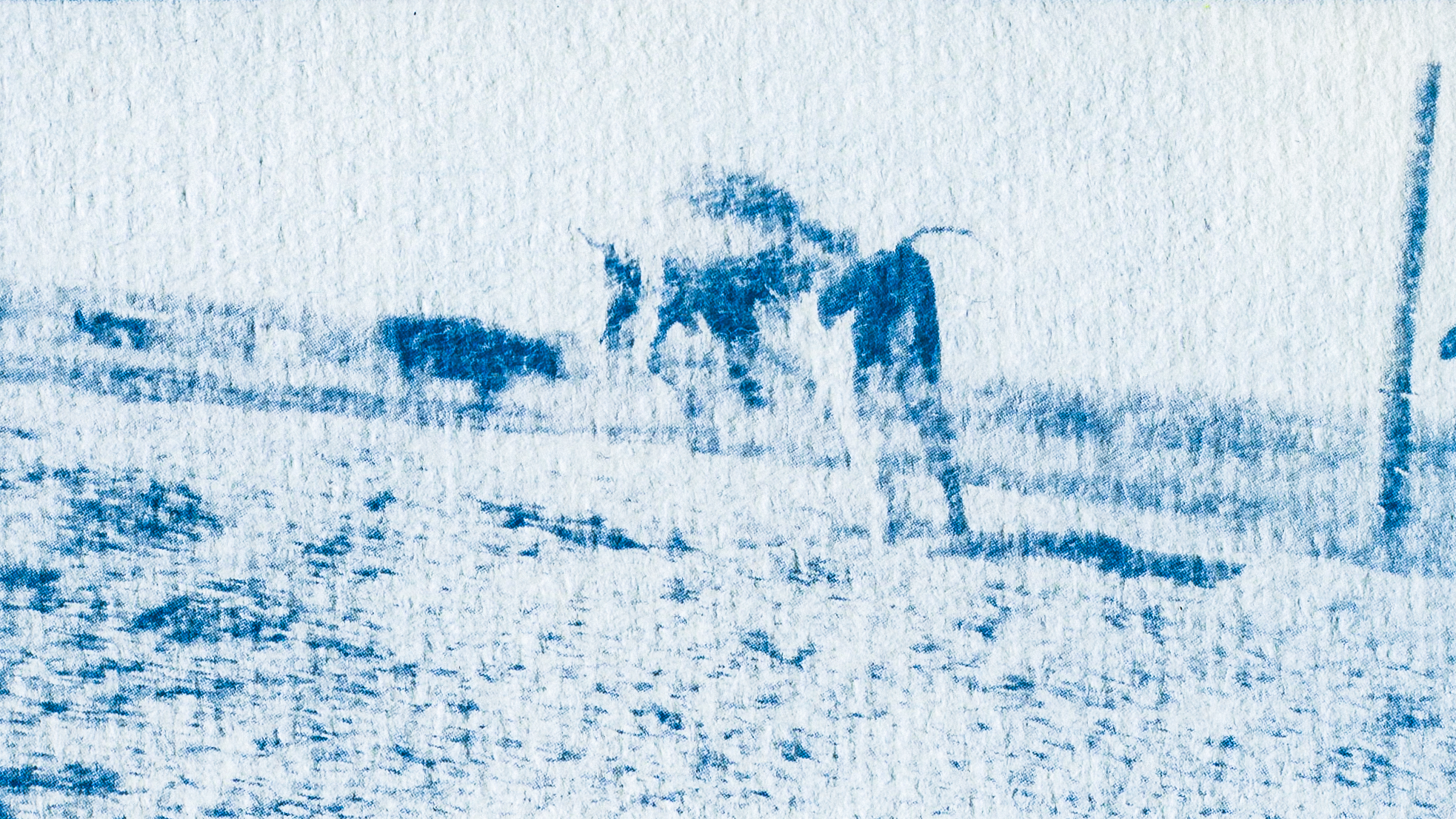
Samuel Ian McCarthy, 1,164 Cows (2026), Cyanotype Animation Still Frames.
Notes:
[1] Edd Carr, Ecology of Grain (2019), p. 20.
[2] T. J. Demos, Decolonizing Nature: Contemporary Art and the Politics of Ecology (2016), p. 1.
[3] Katve-Kaisa Kontturi, Ways of Following: Art, Materiality, Collaboration (2014), p. 48, cited in Edd Carr, Ecology of Grain (2019), p. 21.
[4] Ilford Photo, ‘Advice for Vegans / Vegan FAQs’, [accessed 15 February 2026].
[5] Ivan Tomka, ‘Photographic Material’, U.S. Patent No. 4,360,590 (1982).
[6] ADOX, ‘May I use film if I am a vegan?’, [accessed 5 April 2026].
[7] Susan Sontag, On Photography (1977).
[8] Acumen Research and Consulting, Gelatin Market (Type: Skin Gelatin, Bone Gelatin, Halal Gelatin Type; Application: Pharmaceutical, Edible, Photographic) – Global Industry Analysis, Market Size, Opportunities and Forecast, 2018 – 2025 (2019), [accessed 15 February 2026].
[9] Edd Carr, Ecology of Grain (2019), pp. 45, 57.
[10] Alec Klein, ‘Company Grinds Cow Remains, But Keeps Costs Close to the Bone’, The Wall Street Journal, 18 January 1999, [accessed 4 April 2026].
[11] Edd Carr, Ecology of Grain (2019), p. 42.
[12] Ilford Photo, ‘Advice for Vegans / Vegan FAQs’, [accessed 15 February 2026].
[13] A. Irshad and B. D. Sharma, ‘Abattoir by‑Product Utilization for Sustainable Meat Industry: A Review’, Journal of Animal Production Advances, 5.6 (2015), 681–696.
[14] Edd Carr, Ecology of Grain (2019), p. 44.
[15] William Cronon, Nature’s Metropolis: Chicago and the Great West (1991).
[16] Michelle Henning, Photography: The Unfettered Image (2018), p. 96.
[17] Upton Sinclair, The Jungle (1906).
[18] Edd Carr, Ecology of Grain (2019), p. 69.
Further Reading:
Anat Pick, Why not look at animals? (2015) [accessed 4 April 2026].
Bill Brown, Material Unconscious (1996).
Cary Wolfe, Animal Rites: American Culture, the Discourse of Species, and Posthumanist Theory (2003).
John Berger, Why Look At Animals (1980).
Nicole Shukin, Animal Capital: Rendering Life in Biopolitical Times (2009).
Sustainable Darkroom, Back to Basics Volume II (2025).
Links:
Alternative Photography [accessed 7 April 2026].
Alternative Processes [accessed 7 April 2026].
Curioso Lab [accessed 7 April 2026].
Josephine Ahnelt [accessed 7 April 2026].
Edd Carr [accessed 7 April 2026].
Hannah Fletcher [accessed 7 April 2026].
The Sustainable Darkroom [accessed 7 April 2026].
MFA Thesis:
Samuel Ian McCarthy, Flower Power Photography: (Un)Conscious Materialities, Collaborative Workshops, & Cows (2026).
sammccarthy93@gmail.com | @samuelianmccarthy